Why Measure a Living River?

Walking with the Birrarung

When I was young, Sundays were often spent walking along the Birrarung (Yarra River) with family and friends. The river was always close by, a quiet backdrop to life in Melbourne. Years later, reading Maya Ward’s ‘The Comfort of Water’ account of her 21-day pilgrimage from Port Phillip Bay to Mt Baw Baw, I began to see the Birrarung differently, not as a familiar backdrop, but as a living being that gives, endures, and remembers. What is your connection to the Birrarung?

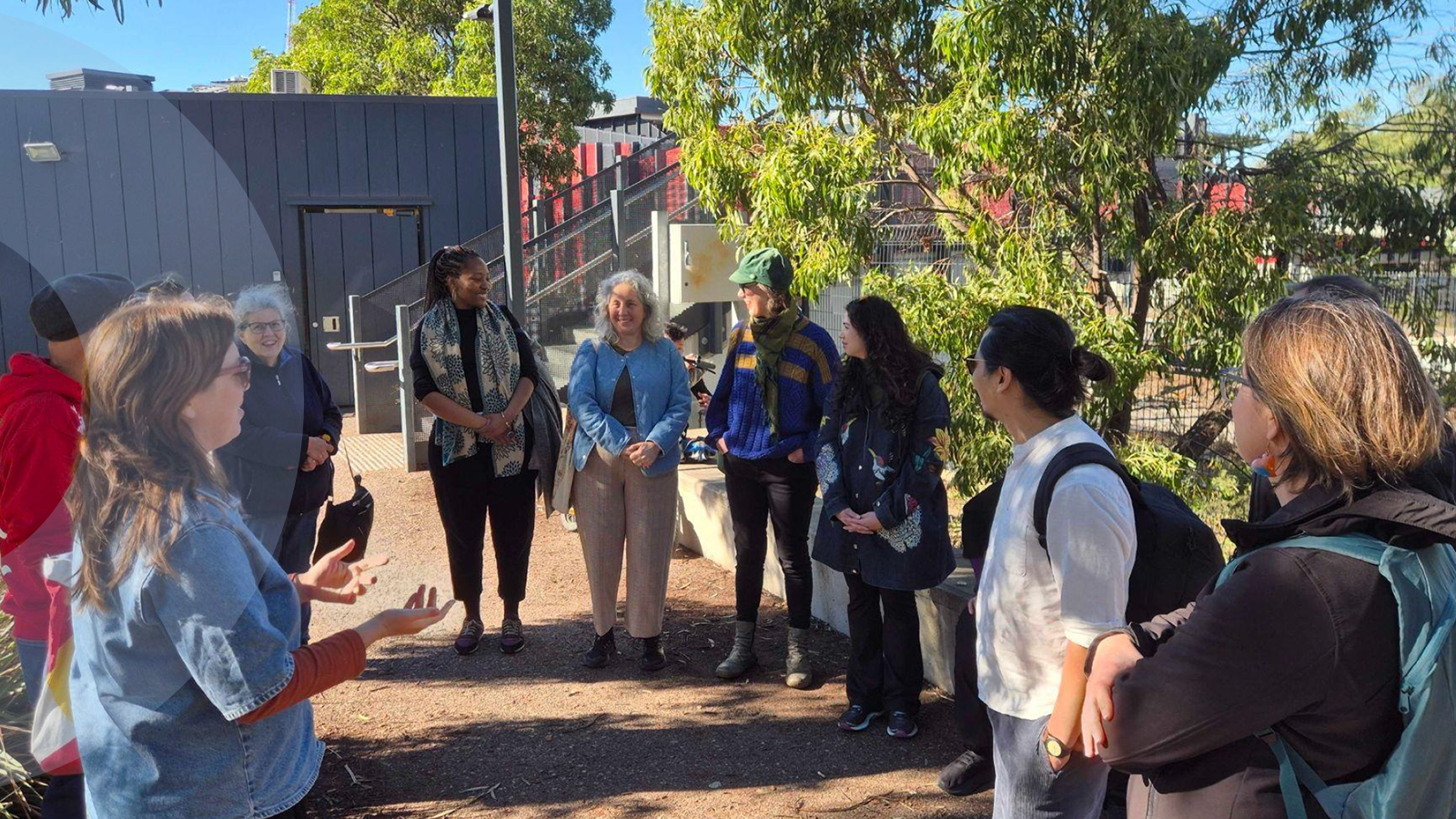
Early in my PhD, I joined a workshop in Warburton with Maya Ward and the Regen Melbourne team. Sitting beside the river, we shared our connection to the Birrarung. It was there I first felt the gravity of its history; once an abundant waterway, reshaped by colonisation, urbanisation, and now, the pressures of a changing climate. 

After years of walking beside it, I entered the Birrarung at Deep Rock, a long-used swimming site. The water was cold and unfamiliar. Its brown hue differed from the oceans I know. I swam cautiously, wondering what lay beneath. After a few moments, I felt the gentle current, the sun on my face, the cliff above, and my mind settle. The Birrarung met me where I was, as it has met many before. At first, a swimmable Birrarung felt out of reach. Immersed in the river, I felt its invitation, already swimmable, somewhere to return to. I knew I would keep swimming.

Speaking with people who know the river, I came to see that understanding the Birrarung begins with time on the river; simply existing in its presence, listening to what it can teach, and allowing that relationship to guide the work. As Kate Harriden (2023) describes it, this is ‘walking Country’, an established indigenous research method. 

Coming from a background in mathematics and optimisation, I was drawn to a question that has since become the heart of my PhD: How do we measure a living, changing river in a way that honours its complexity? The act of measuring is not just technical; it is a way of knowing the river, of informing the decisions we make, and highlighting where interventions can have the greatest impact. 

What does ‘swimmability’ mean?

My PhD is part of Regen Melbourne’s broader Swimmable Birrarung Earthshot: a bold, community-driven vision to restore the Birrarung to a swimmable state, recognising swimmability not just as an environmental goal but as a public asset. At the outset, I found myself asking: What, in fact, does "swimmability" mean? Through reading, reflection, and conversations, we frame swimmability through five guiding principles. 

  1. Ways of Knowing recognises Indigenous, local, and scientific knowledge systems, each offering distinct insights into how the river lives and changes. 

  2. Community highlights people’s connection to the river. That connection fosters stewardship: a shared responsibility to care for the Birrarung. When the river feels inviting and safe, people's presence, especially swimming, signals progress towards health. 

  3. Water Quality captures the physical, chemical, and biological conditions that make the river safe for swimming, from clarity and temperature to nutrients, contaminants, and bacteria. 

  4. Healthy Ecosystems reminds us that the Birrarung is an interconnected natural, cultural, and socio-economic system, where species, habitats, people, and processes that connect them must remain in balance. 

  5. Intervention considers actions we can take, such as riverbank planting or stormwater management, that might restore river health. 

Together, these principles offer a framework for understanding swimmability and guide how data and modelling can support it. 

What do we measure, and how? 

Early ecology saw ecosystems as closed, natural systems, maturing towards balance. Over time ecologists came to see them as open, dynamic, and often disturbed, able to reorganise or shift into new states. People are now recognised as part of ecosystems, shaping them and being shaped by them. This social-ecological perspective is especially relevant for the Birrarung, where culture, community, and environment are inseparable. Yet many water quality assessments focus mainly on pathogenic microorganisms such as E. coli. These indicators are critical for swim safety, but they are too narrow to reflect the river as a whole.

This project is still in its early stages, and much of the work ahead is deciding what data to collect. We intend to draw on metrics that span our guiding principles. 

  1. Ways of Knowing is difficult to quantify. Jack Norris reminds us that naming was an act of colonial possession. The river we know as the Yarra is Birrarung, “the river of mists”. That mishearing and recasting became a tool of dispossession. It stripped meaning, silenced Country, and overlaid colonial authority. Hand in hand came exploitation of the Birrarung for industry and sewage, and changes to the rivers course to aid shipping access and prevent regular flooding. Today the Yarra’s course, from Herring Island down, the Birrarung’s course is completely reshaped. Restoring language to place is one practical expression of the principle, Ways of Knowing, guiding how we speak about and care for the river. In Walking and Being, Tony Birch describes the river and its surrounds as a living archive, holding traces of colonial violence and of endurance. At Westgate park, he observes layers of imported soil masking past harms, while the place itself still holds memory. He warns that restoration must not bury past harms, but listen to the stories held in the land. 

  2. Community and stewardship are reflected in how people relate to the river. We will pay attention to people’s presence on and around the Birrarung, their perception of safety, and visible acts of care such as clean-up events or local activities. 

  3. For Water Quality, we will focus on indicators most relevant to public health, particularly swim safety. Some are visible, clarity, colour, and temperature. Others require testing, such as bacteria like E. coli, nutrients like nitrogen and phosphorus, and emerging contaminants such as PFAS (man-made “forever chemicals” found in everyday products such as cosmetics and cleaning agents, which persist for decades), pharmaceuticals, pesticides, and microplastics.  

  4. Ecosystem Health is captured through the life that the river supports. We will examine simple measures of biodiversity, habitat condition, and resilience to disturbances. Importantly, people are part of this system. The Birrarung sustains cultural life, wellbeing, recreation, and local economies, just as people, in turn, shape the river through how we care for it and use it. 

  5. Finally, Interventions are about action, not measurement. Guided by the above principles, they define practical steps towards restoration, such as native revegetation or stormwater management.

These parameters will form the foundation for datasets and models that attempt to reflect the complexity of the living river. 

From Measurements to Meaning 

Once datasets are established, the task is to move beyond raw measurements and draw out the information they contain, the patterns and relationships that begin to tell a story about the river. From there, we build knowledge, an evidence-informed understanding of the Birrarung’s condition and how it is changing. Read alongside Indigenous and local knowledge, that understanding may mature into wisdom, guiding careful action to restore the river’s health. 

This project seeks to model the Birrarung as an interconnected system. That means incorporating a wide range of features that capture different dimensions of river health, and looking for patterns across space and time. For example, rain increases the river’s flow, which stirs up the riverbed, making the water murkier and releasing nutrients into the stream. This is one simple chain of relationships; many more, some subtle and some hidden, shape the river's health. The challenge is not only to describe the river’s conditions but also to identify the drivers of degradation, whether stormwater runoff, land use, climate change, or other pressures, so that interventions can be targeted where they have the greatest impact.

In this project, we will use Machine Learning, a branch of Artificial Intelligence that identifies patterns in data, to evaluate river health and detect the conditions associated with its degradation. It is particularly valuable because Machine Learning can weave many signals into a coherent picture. However, environmental datasets are messy: samples are taken unevenly, at different times of day, with gaps across time and space. A substantial part of the work will be sourcing diverse datasets, integrating them, and carefully managing the imperfections they contain. 

Returning to the River 

In the end, this work returns to the Birrarung. Guided by the five guiding principles: Ways of Knowing, Community, Water Quality, Healthy Ecosystems, and Intervention, we seek to understand what data to collect, how to interpret it, and how to model the Birrarung as a living, changing system, so that practical interventions can be guided to where they matter most.

The approach is simple: spend time on the river, listen, gather the right signals, and bring them together into a dataset that captures river health as a whole. From there, we can ask practical what-if questions: what if we add shade along the banks, treat more stormwater, or reconnect a wetland, to see how those choices might change conditions over days, seasons, and sites. If the Birrarung feels inviting again, if people like us choose to swim, it will be because many people listened well, measured wisely, and interpreted data with care, in ways that honour the river’s living nature. 

References

Birch, T. (2019). Walking and being [Journal Article]. Meanjin, 78(4), 130–137. 

Dickerson, J. E. (2022). Data, information, knowledge, wisdom, and understanding. Anaesthesia & Intensive Care Medicine, 23(11), 737–739. https://doi.org/https://doi.org/10.1016/j.mpaic.2022.08.012 

Harriden, K. (2023). Working with Indigenous science(s) frameworks and methods: Challenging the ontological hegemony of ‘western’ science and the axiological biases of its practitioners. Methodological Innovations, 16(2), 201-214. https://doi.org/10.1177/20597991231179394 (Original work published 2023)

Norris, J. (2021). The Naming of the Yarra River as an Act of Colonialism. (Colonial Histories) Agora vol. 56 no. 3 (2021). 56, 59–67.


Subscribe for news and views from the frontlines of Melbourne’s regeneration.

Next
Next

What keeps Katherine Trebeck awake at night?