.webp)
A River Framed by a Question
During my internship with Regen Melbourne, I came on board to support the Swimmable Birrarung Earthshot, a bold initiative to make the Yarra River safe, healthy, and welcoming for swimming again. My work centred around a deceptively simple but far-reaching question:What prevents us from swimming in the Birrarung today?
The answer, in large part, lies in stormwater. As rainfall moves across our roads, rooftops, and industrial sites, it gathers a mix of contaminants, from heavy metals to bacteria, and delivers them directly into the river system. The effects are more severe during storm events and disproportionately harm urban tributaries. Stormwater, though often invisible, has become a major barrier to ecological restoration, recreational use, and cultural reconnection with the river.
Mapping What We Know and What We Don't
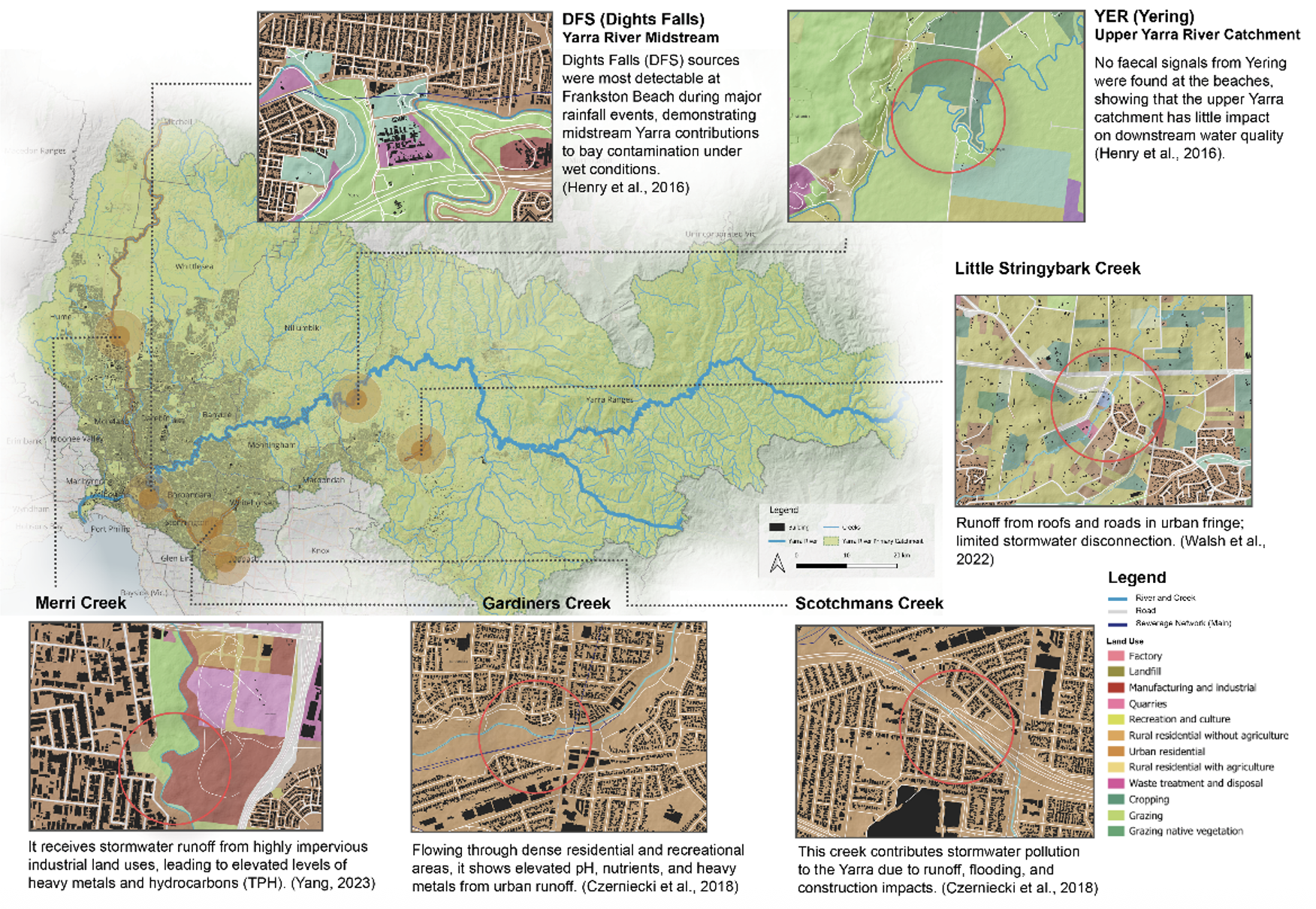
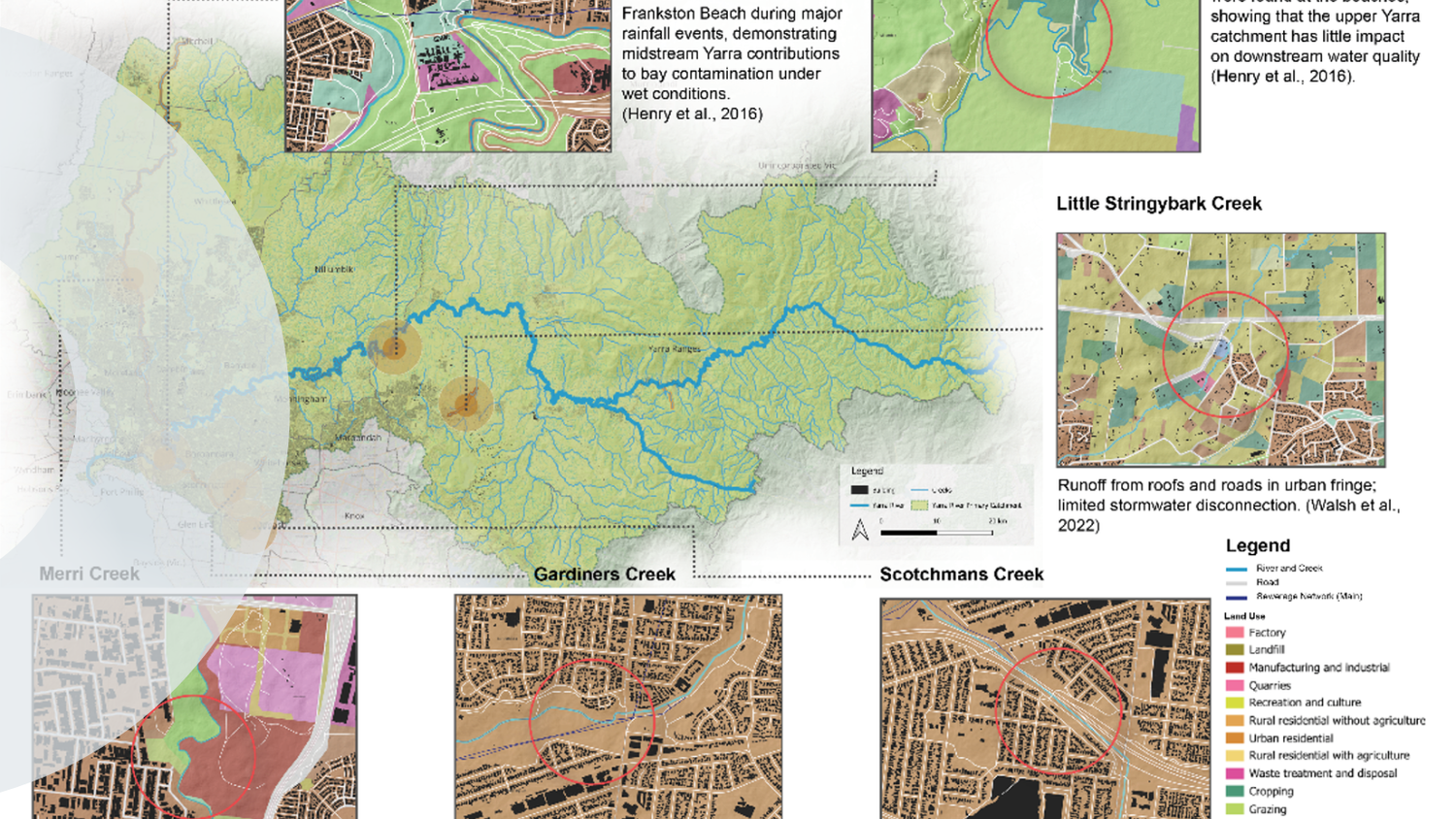
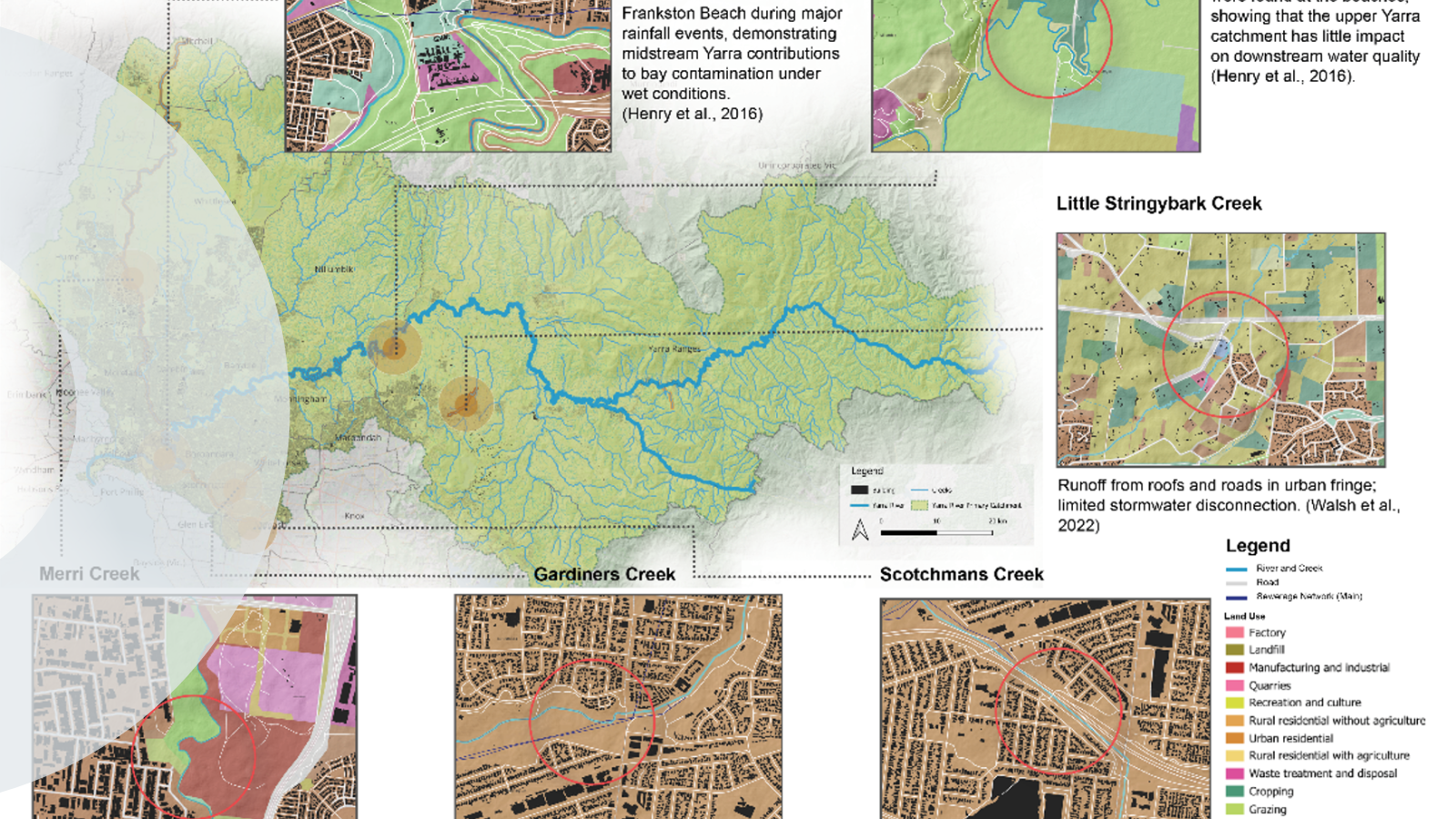
In the project, I analyzed and integrated existing research about stormwater and its impact on urban waterways, with a particular focus on the Birrarung. A literature study of 28 scholarly sources was collected, a directory of local and worldwide academics in this domain was created, and GIS mapping was employed to illustrate land use patterns and stormwater pressure spots along the river and its tributaries.
The review revealed both encouraging insights and persistent gaps. There is strong evidence of effective infrastructure, such as wetlands, biofilters, and distributed systems, that can mitigate pollution loads. Similarly, tools like real-time water quality monitoring, modelling frameworks, and scenario planning are increasingly available. Nevertheless, the main stream of the Yarra remains insufficiently researched, particularly in areas of considerable public interest, such Abbotsford, Richmond, and the Central Business District.
Framing Stormwater as a Cultural and Design Issue
This study revealed that stormwater management extends beyond technical concerns, encompassing cultural, relational, and political aspects as well. Frameworks that integrate Indigenous knowledge, public trust, and experiential comprehension of the river are essential for any meaningful swimmability effort. The Yarra River Protection (Wilip-gin Birrarung murron) Act invites us to see the Birrarung not just as a waterway, but as a living being. Indigenous-led design methodologies reinterpret stormwater, typically regarded as waste, as \"cultural flow,\" which is intrinsically linked to ecological stewardship and custodianship.
Case studies, such the Seine River in Paris and the Parramatta River in Sydney, illustrate that the restoration of urban rivers for public swimming is both feasible and important. These precedents underscore the necessity of integrating infrastructure investment with community engagement, transparent risk communication, and flexible governance structures that can adapt to climate variability.
Learning Through Collaboration
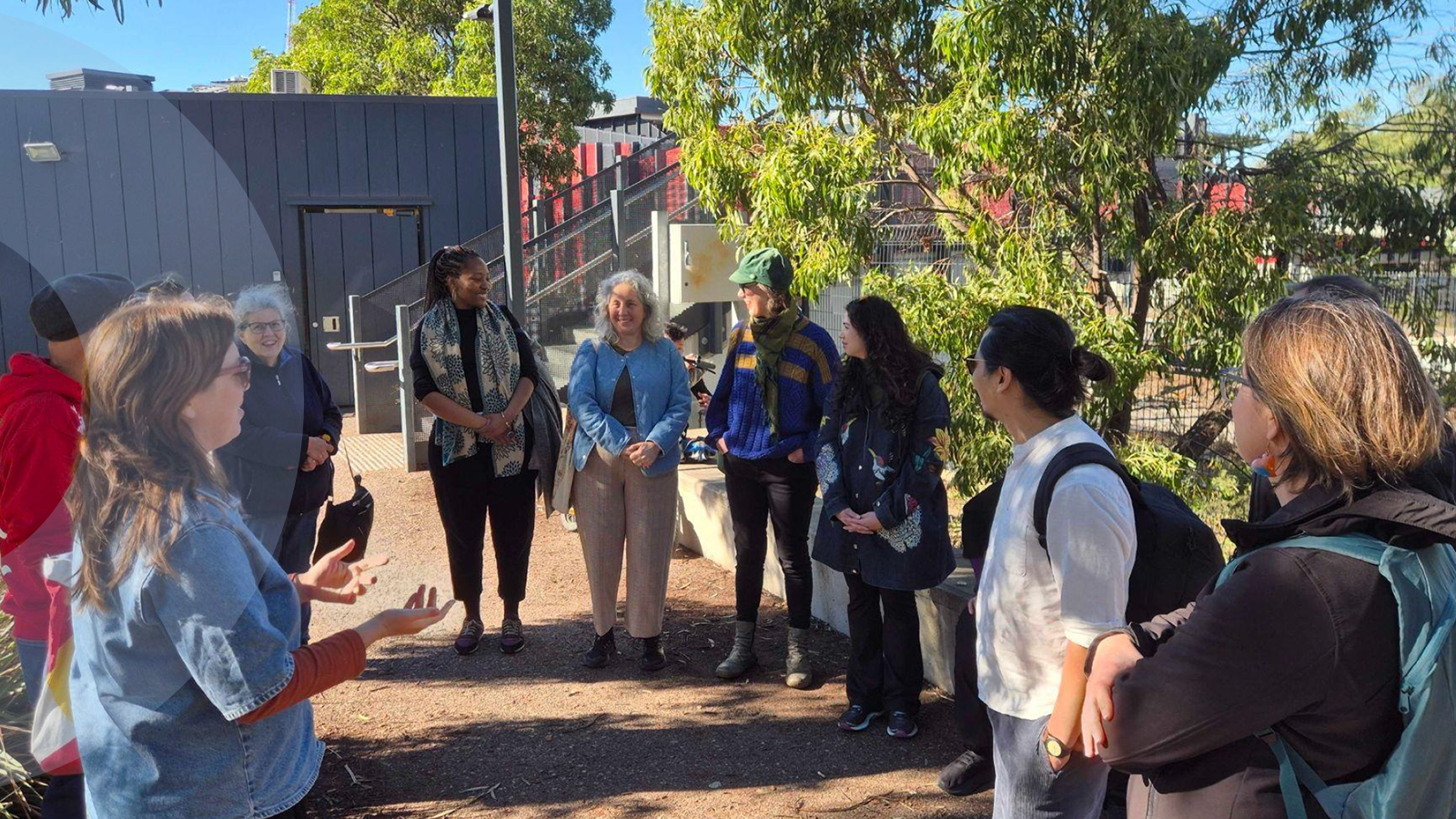
This internship was notably worthwhile because it provided the opportunity to participate in a collaborative knowledge-building process inside a values-driven organisation. At Regen Melbourne, collaboration beyond simple task-sharing; it was fundamental to the organization's approach of systems thinking, relational dynamics, and place-based futures.
This experience increased my understanding of planning in uncertain and interdependent contexts as a Master of Urban Planning and Design student. It emphasized that planning encompasses not just physical strategy and infrastructure delivery but also narrative and relational practices. The way we define problems, frame data, and prioritise solutions shapes what futures we make possible.
Toward a Swimmable Birrarung
The Swimmable Birrarung Earthshot offers more than a water quality goal, it invites us to reimagine our relationship with the river. A genuinely swimmable Birrarung necessitates not only ecological standards but also public confidence, accessibility, cultural inclusivity, and intergenerational stewardship.
My contribution, though small in scale, was part of a much larger shift in how we understand and care for urban rivers. By surfacing overlooked knowledge, visualising spatial patterns, and identifying key opportunities for future work, I hope this project provides a useful foundation for those working to make the Birrarung not only swimmable, but thriving and relationally alive.

.png)