
How can we unlock capital in service of regeneration?

Systemic Investment

Systemic Investment
Context

Barriers in the System

There is growing global momentum towards the urgent need for systemic change to address climate, ecological and social crises. However, financial flows, and the purpose of the financial system fundamentally, remain misaligned with the scale and depth of transformation required. While many sustainable finance initiatives exist, the dominant financial paradigm continues to detach financial systems from the real economy, overlooking the true risks we face, the scale of change needed and the opportunities for investment in system-level interventions.

As a result, the flow of capital into systemic and adaptive interventions remains limited and fragmented. Transformation within the financial sector is necessary to create the coherence and scale required to enable people and planet to thrive over the long term.

Our Response

What We're Doing

Systemic Investment responds to these entrenched conditions, sitting at the intersection of finance, systems thinking and place. It draws on multiple levers of change, asset classes and points of intervention, in collaboration with a diverse set of actors.

This work within the Systems Lab presents an open invitation to co-create transitional financial infrastructure and demonstrate what systemic investment looks like in practice. It is underpinned by an exploration of the fundamental purpose of the economy and financial sector, but is equally focused on the creation of new financial instruments in place, as well as the infrastructure and capabilities required for these to take hold and scale in Melbourne and beyond.

What we're asking

To guide our learning, we are asking questions about what is in our current system, what could be in the future and how to generate change towards that aspiration. In Systemic Investment, our overarching learning questions are:

WHAT IS

To what extent do capital flows currently serve social, environmental and economic wellbeing?

WHAT COULD BE

What could it look like for financial and capital systems to be in service of regeneration in place?

HOW TO

How might we develop investment paradigms, models and capability to orient capital to regeneration in place?

learning portfolio

Ecosystem Development & Capital Coordination

For the scale of change required over the long term, we need more than just pockets of capital activated in service of regeneration. This theme focuses on strengthening ecosystems of actors and building new markets that embed regenerative aspirations into their core objectives. Our learning questions within this theme include:

  • How might we support the establishment of an ecosystem that develops the future financial infrastructure and markets that centre regeneration?
  • How might we mature and equip ecosystems of actors with approaches for collective decision-making and coordinated resource distribution?

Investment Infrastructure & Mechanisms

Unlocking capital in service of regeneration can’t just happen in the abstract - it requires real investment structures and instruments, including creative use of existing mechanisms and development of new ones. This theme focuses on developing, implementing and learning from innovative ways to direct capital to the health of our city’s communities and critical systems. Our learning questions within this theme include:

  • How might we develop new investment infrastructure that can facilitate systemic investment in place?
  • How might we create coordinated financing mechanisms that support the flow of capital in place and that centre alternative forms of value creation?

Investment Purpose & Value

Any systemic change to our financial system requires a fundamental shift in how we understand the purpose of finance and the economy, as well as more holistic definitions of what we value in financial markets. This theme focuses on these core definitional elements and how they can be reoriented to redirect capital flows. Our learning questions within this theme include:

  • How might we shift dominant paradigms about the purpose of our economic and financial systems towards regeneration?
  • How might we redefine and measure value, returns and impact to incorporate holistic social, ecological and economic outcomes?
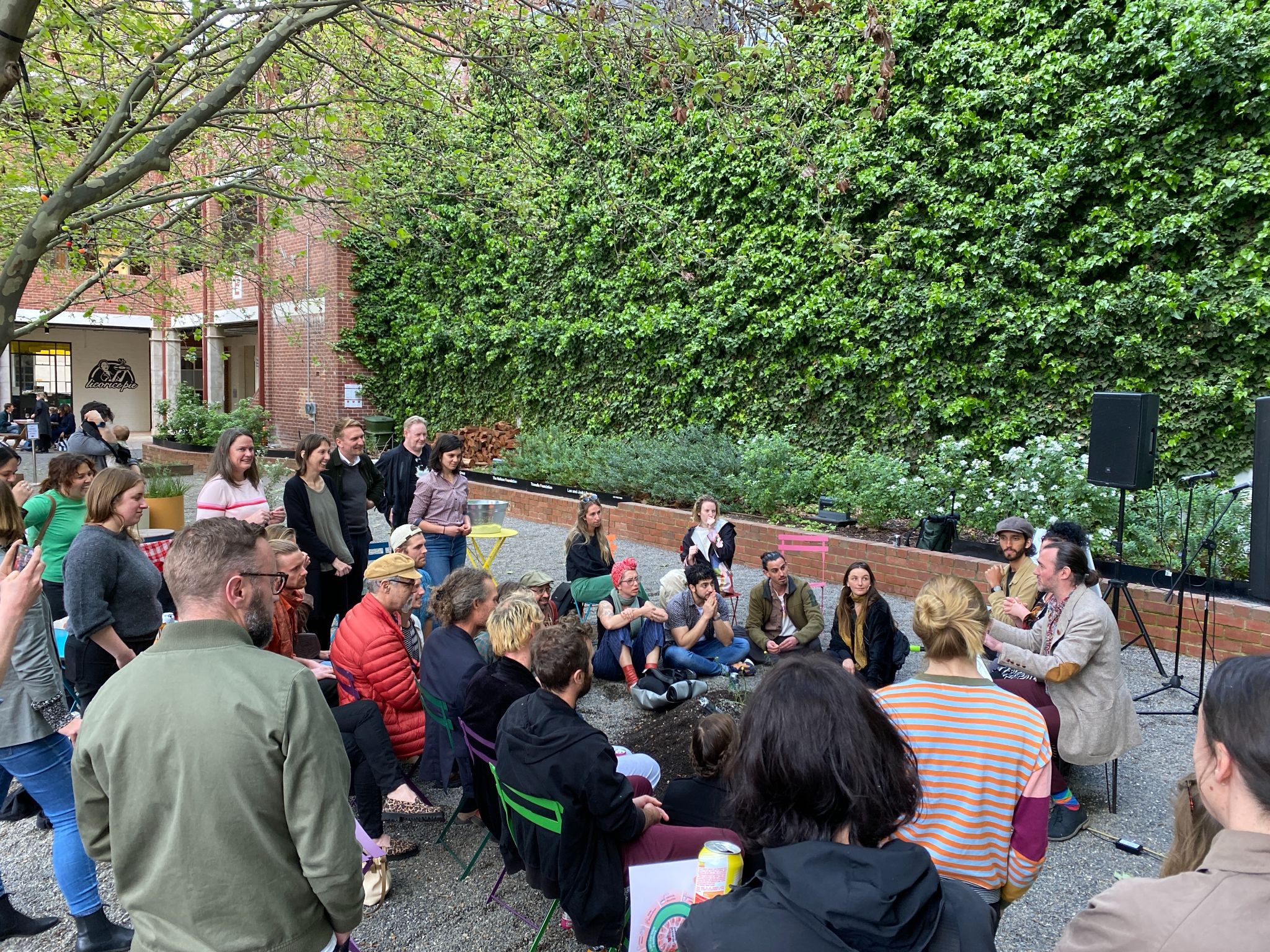
Large crowd at the City Portrait for Greater Melbourne launch in a heritage brick venue with purple lighting
Measuring Systemic Change

Measuring Systemic Change

New ways to sense progress towards a regenerative future
The Doughnut in Practice

The Doughnut in Practice

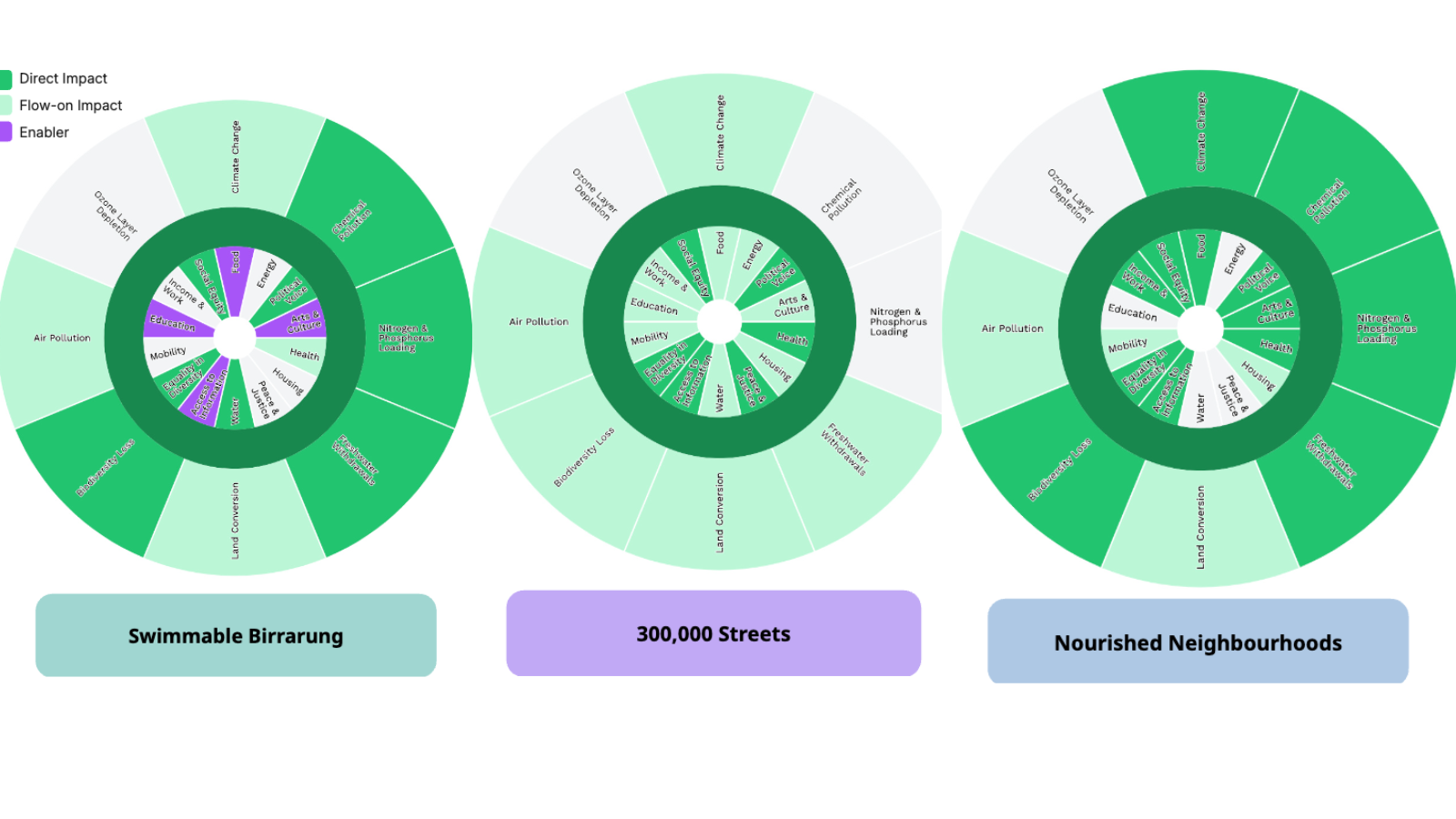
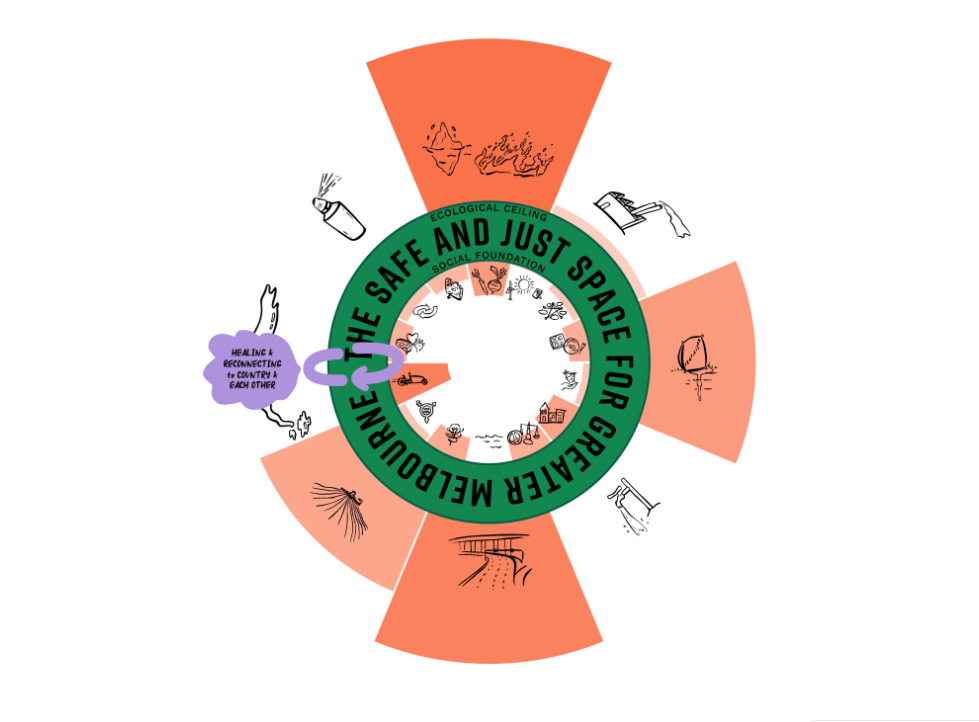
Regen Melbourne's transitional infrastructure and Doughnut Economics
Greater Melbourne City Portrait

Greater Melbourne City Portrait

Measurable outcomes for Melbourne's regenerative future
Capital Orchestration

Capital Orchestration

An action-research project on the barriers and opportunities to orchestrating capital in service to systems transformation.
Melbourne Invests in Systemic Transformation (MIST)

Melbourne Invests in Systemic Transformation

A platform to explore the potential of capital to drive systemic change.
Transforming the Public Plate

Transforming the Public Plate

A Menu of Options for Public Food Procurement That Nourishes People, Place and Planet
Connected Corridors

Connected Corridors

Transforming 1600 km of underutilised public land into an ecological network that reconnects communities and ecosystems.
Water Markets for Thriving Ecosystems

Water Markets for Thriving Ecosystems

Connecting water markets for a Swimmable Birrarung
Riverbank

The Riverbank

A financial backbone for the coordination of investment in service of the life-force of Melbourne
Systemic Risks on the River

Systemic Risks on the Birrarung

Centring the Birrarung Yarra River to surface systemic risks and the economics of regeneration
Wellbeing capital

Wellbeing capital

Participatory grant-making to empower local leadership