
Measuring What Matters
How can we measure what we truly value?

Measuring What Matters

Measuring What Matters
Context

Barriers in the System

The old adage "what gets measured gets managed" is often debated, but on the whole describes how a set of blunt, growth-centric metrics have dominated the orientation of our economic system for too long. When the concept of Gross Domestic Product (GDP) was introduced, it was identified as one of many measures required to understand the welfare of a nation. Since then, however, this metric has since been applied uncritically, and often in isolation, treating detrimental social and ecological effects of economic growth as externalities and failing to question whether endless growth is desirable or even possible.

The narrow metrics driving decision-making in our economic and political systems are unable to effectively or holistically represent our social and ecological wellbeing. Without a fundamental shift, we will continue to set goals and direct actions that perpetuate social and ecological harm.

Our Response

What We're Doing

To foster social and ecological thriving, we need holistic ways to understand where we are, where we are heading and how change is unfolding. Regeneration requires more than vision: it requires tools to set direction, sense progress, assess impact and adjust course. Measurement can help make complex systems intelligible, supports shared goals, and provides evidence to guide action.

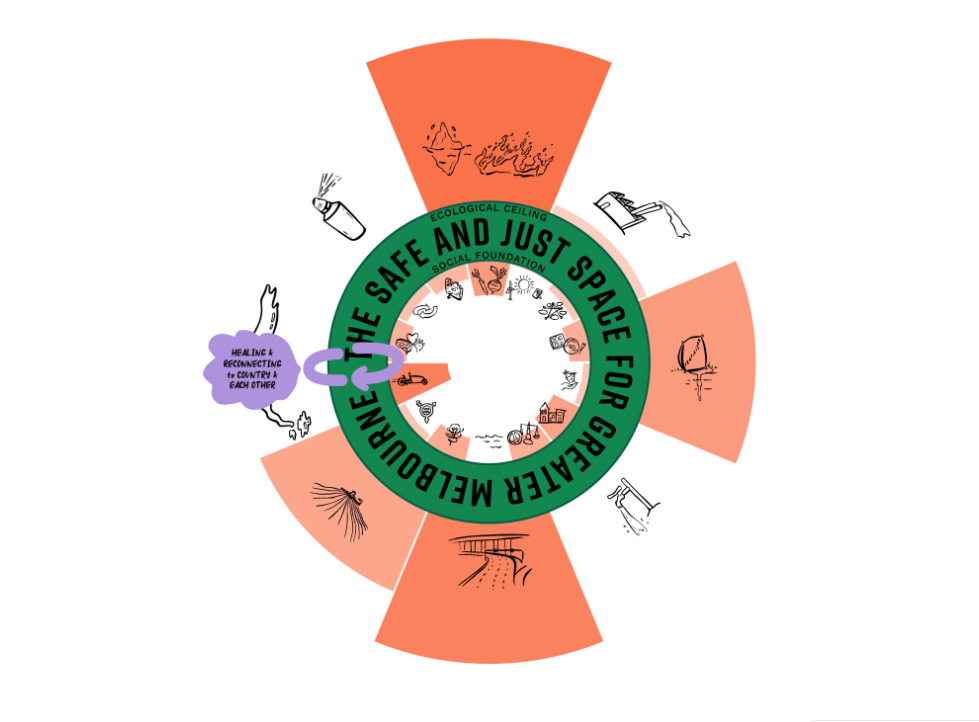
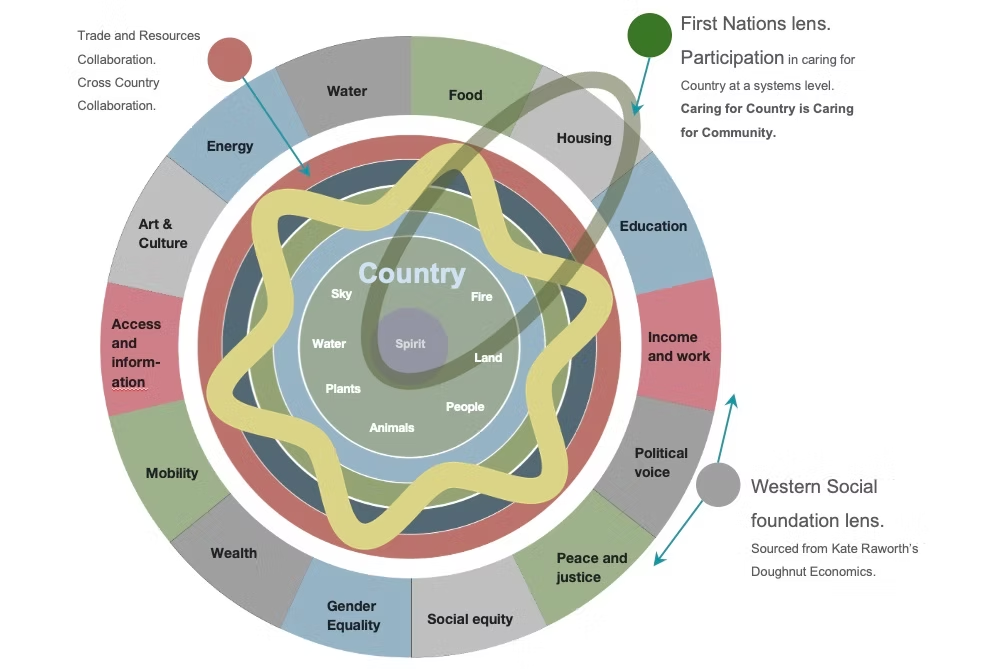
Measuring What Matters is the Systems Lab's program for developing and applying such tools. It is grounded in Regen Melbourne's foundational work with Kate Raworth's Doughnut Economics, which centres the idea of a 'safe and just space' — meeting everyone's social needs without breaching ecological limits — as a compass for our city. In 2023, Regen Melbourne launched the Greater Melbourne City Portrait — a robust metropolitan application of the Doughnut.

Building on this foundation, Measuring What Matters works with local and global partners to develop, test and apply measurement models, indicators and practices that support systems change for regeneration. Recognising that measurement shapes priorities and influence, this work seeks to learn about approaches that are inclusive, practical and aligned with long-term social and ecological thriving.

What are we asking

To guide our learning, we are asking questions about what is in our current system, what could be in the future and how to generate change towards that aspiration. In Measuring What Matters, our overarching learning questions are:

WHAT IS

To what extent do current forms of measurement represent and support the work of regeneration?

WHAT COULD BE

What could it look like for measurement systems and practices to centre social and ecological thriving?

HOW TO

How might we test and apply measurement models and practices to create, describe and evaluate systemic change towards regeneration?

learning portfolio

Overall Portfolio

Our work in Measuring What Matters focuses on how to deploy measurement to enable long-term change to our understandings of, relationships with and decisions about our social, ecological and economic systems. We approach this through a ‘Learning Portfolio’, made up of real projects in practice which have a combined doing and learning emphasis. This work originated with our exploration of Doughnut Economics and development of the Greater Melbourne City Portrait as a way to holistically define and measure long-term goals for Melbourne’s regeneration. We continue to build on and draw from this work, while also considering how measurement can facilitate change and decision-making in real-time, through inclusive and democratic practices.

Application & Decision-making

Measurement is ultimately only useful if it is employed to inform policy, strategy and action. This theme focuses on how new and diverse measurement frameworks and approaches can be applied to enable systemic change. Our learning questions within this theme include:

  • How might we align new measurement frameworks with decision-making?
  • How might measurement support and facilitate change?
  • How might we incorporate new measurement frameworks into understandings of risk?

Measurement Practices

Decisions about how and what we measure, who does the measuring and who has access to information are never entirely objective; they are informed explicitly or implicitly by the values and objectives of the decision-maker. This theme focuses on how measurement and data practices can be designed to be holistic and inclusive. Our learning questions within this theme include:

  • How might we create structures and practices that democratise measurement?
  • How do we measure meaningfully in a world of uncertainty and rapid change?
  • How might we understand and represent relationality in measurement?

Measurement Frameworks & Models

We need new, holistic measurement approaches that move us past narrow and harmful growth-centric models. This theme focuses on identifying and implementing measurement models that centre social and ecological wellbeing for setting goals and understanding change over time. Our learning questions within this theme include:

  • How might we adopt new measurement frameworks that are holistic and centre regenerative principles and objectives?
  • How might we capture evidence of systemic change over time?
Large crowd at the City Portrait for Greater Melbourne launch in a heritage brick venue with purple lighting
Indigenous Knowledge and Regenerative Practice

Indigenous Knowledge and Regenerative Practice

Alignment of the Australian Indigenous Doughnut with Regen Melbourne's frameworks and practices
Risk, Sustainability and the Doughnut

Risk, Sustainability and the Doughnut

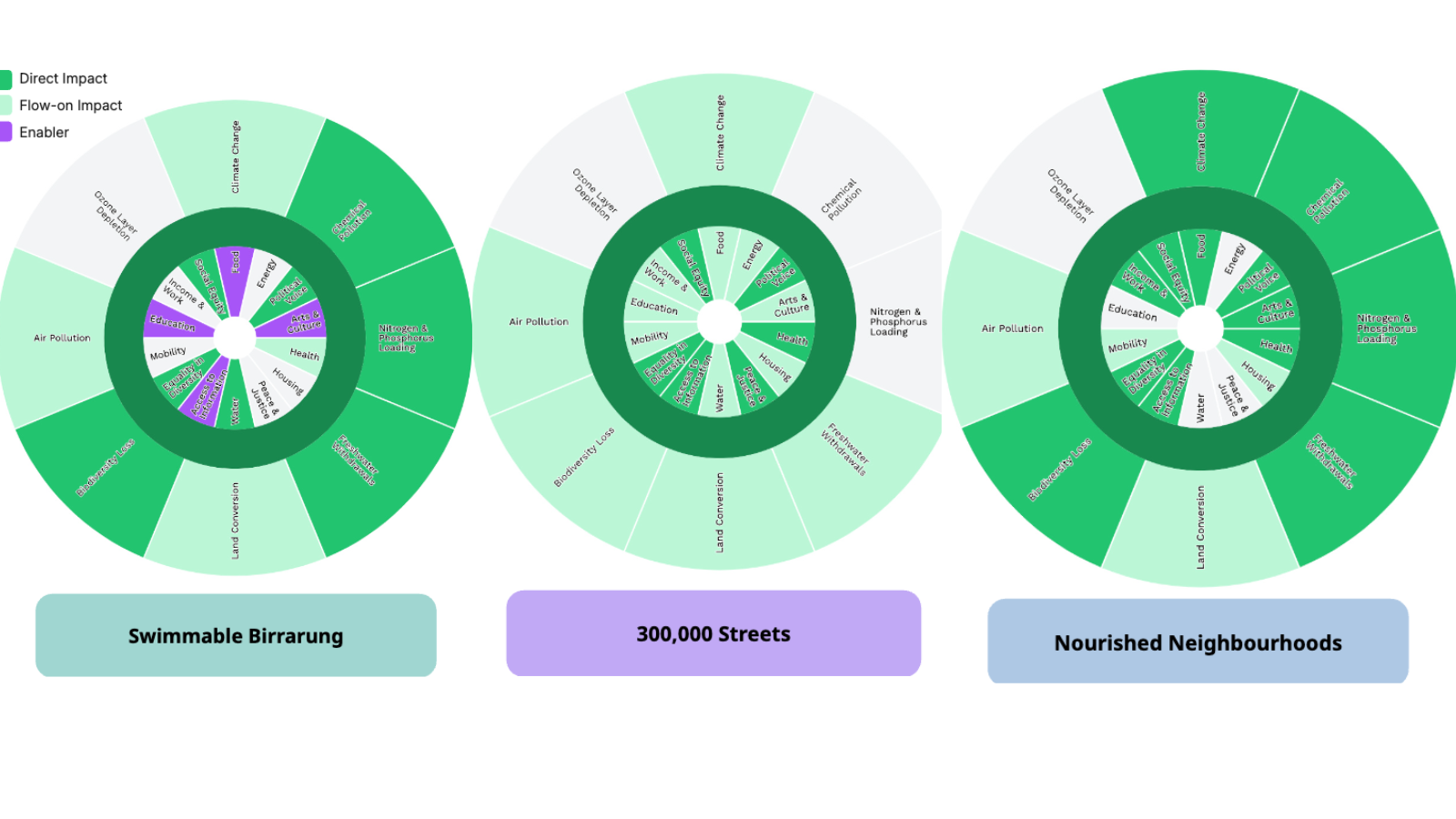
Systems dynamics and risk modelling aligned to Doughnut Economics
Measuring Systemic Change

Measuring Systemic Change

New ways to sense progress towards a regenerative future
The Doughnut in Practice

The Doughnut in Practice

Regen Melbourne's transitional infrastructure and Doughnut Economics
Greater Melbourne City Portrait

Greater Melbourne City Portrait

Measurable outcomes for Melbourne's regenerative future
Testing the water

Testing the water

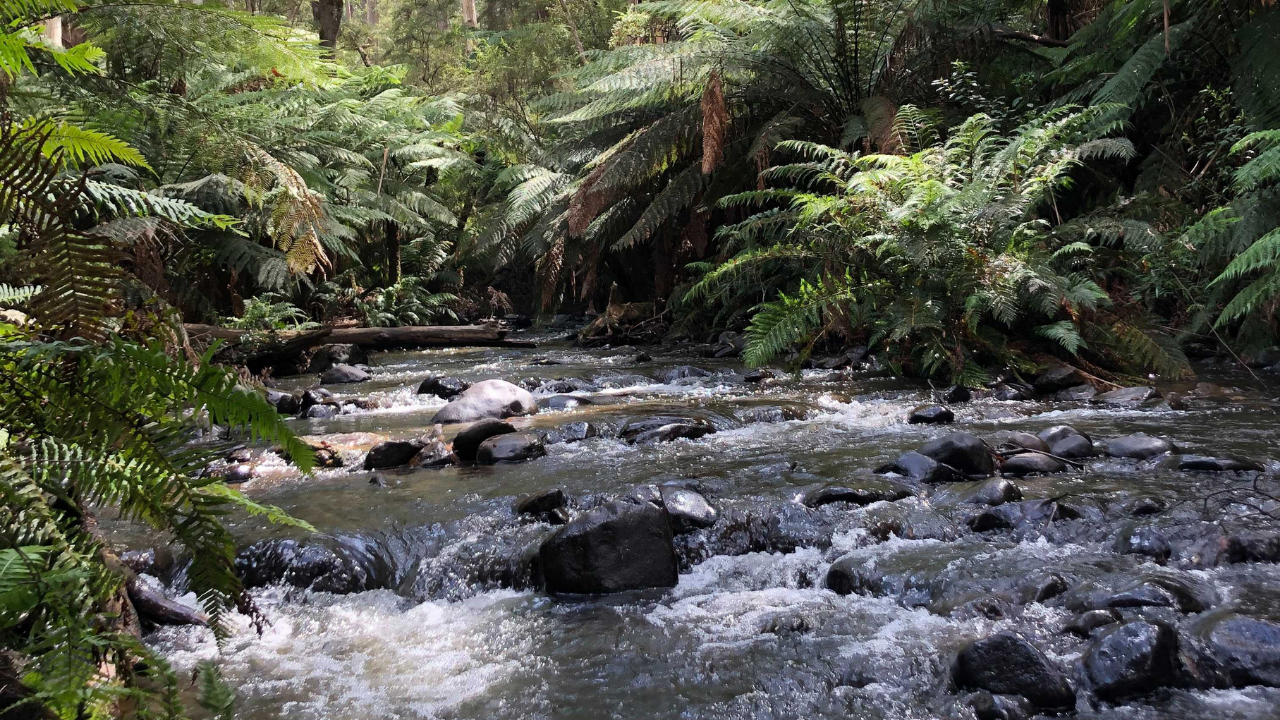
A water quality baseline for the Birrarung

Relational Ecology

Relational infrastructure to orient knowledge flows in service of public good
Water Markets for Thriving Ecosystems

Water Markets for Thriving Ecosystems

Connecting water markets for a Swimmable Birrarung

Stormwater Sources

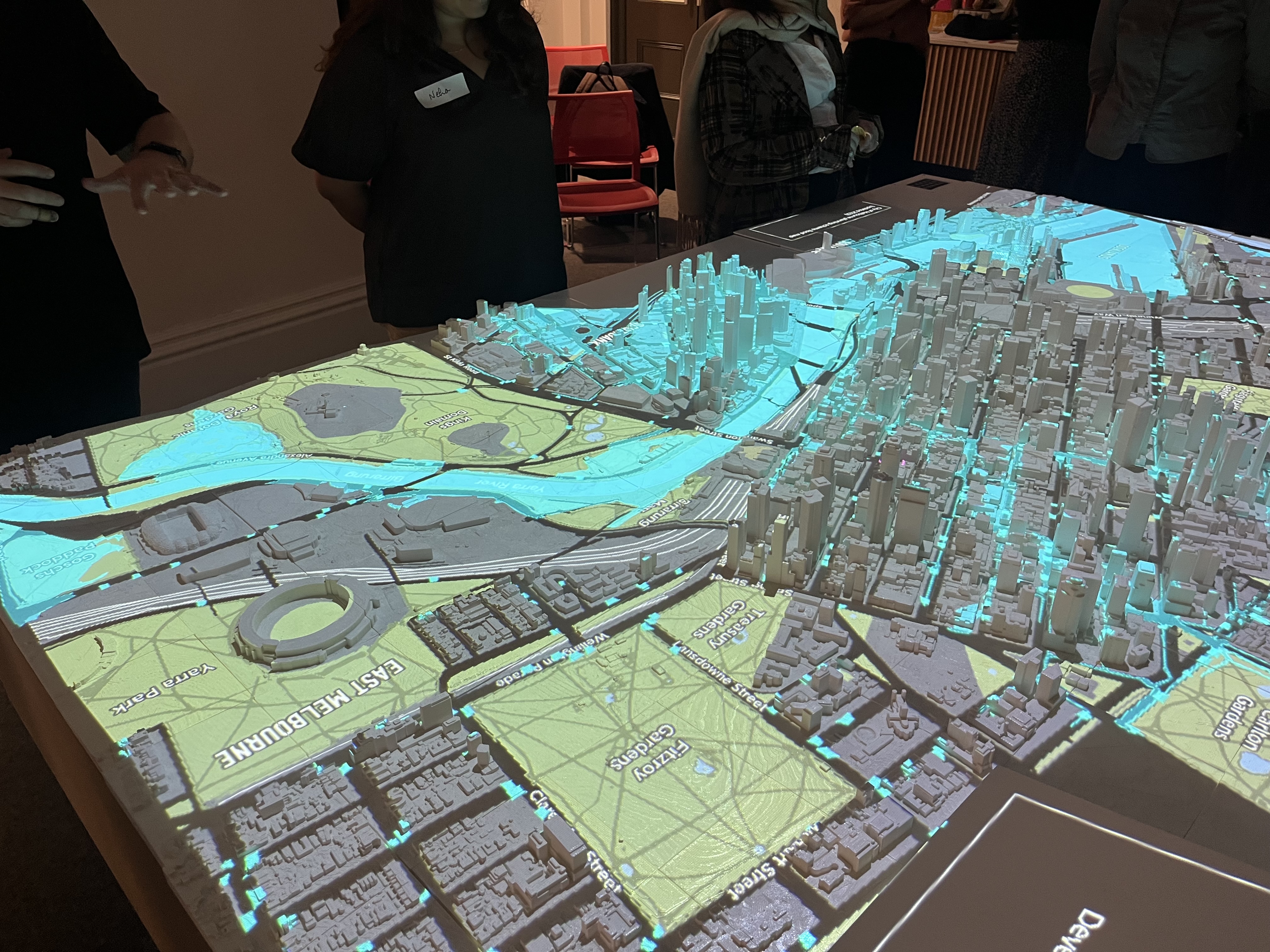
Innovative visualisation of stormwater sources, flows and river health
Data Optimising for Swimmability

Data Optimising for Swimmability

Optimising data for decision making and swimmability along the Birrarung Yarra River