.webp)
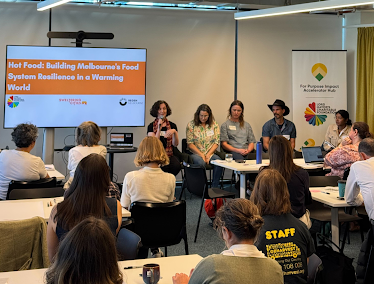
Last month, Sweltering Cities, Lord Mayor's Charitable Foundation and Regen Melbourne hosted a half-day workshop: "Hot Food: Building Melbourne's Food System Resilience in a Warming World." Our Food Systems convenor, Dheepa Jeyapalan, reports back.
The workshop aimed to spark dialogue about how we can nourish Melbourne's population during extreme heatwaves. We had a full house with stakeholders from all parts of the food system, community and climate resilience sector.
Hot topics: from food costs to food swaps
The event began with expert presentations exploring the intersection of extreme heat and food resilience.
Dr. Rachel Carey, Senior Lecturer in Food Systems at University of Melbourne, spoke about rising food costs since the millennium drought, vulnerabilities in food distribution, and the shrinking peri-urban food bowl.
Dr. Catherine Trundle, Senior Lecturer in Public Health at La Trobe University, challenged how we conceptualise heat, highlighting impacts on physical and mental health as well as community wellbeing.
Courtney Young, Woodstock Flour Co-Founder and Peer Learning Manager at Soils for Life, shared the impacts of extreme heat on farming.
Edgar Caballero Aspe, Education and Sustainability Coordinator at Banksia Gardens Community Services, highlighted the prevalence of food swamps in Melbourne's northern suburbs and the importance of urban farming.
Scenario mapping: Forecast for extreme heat
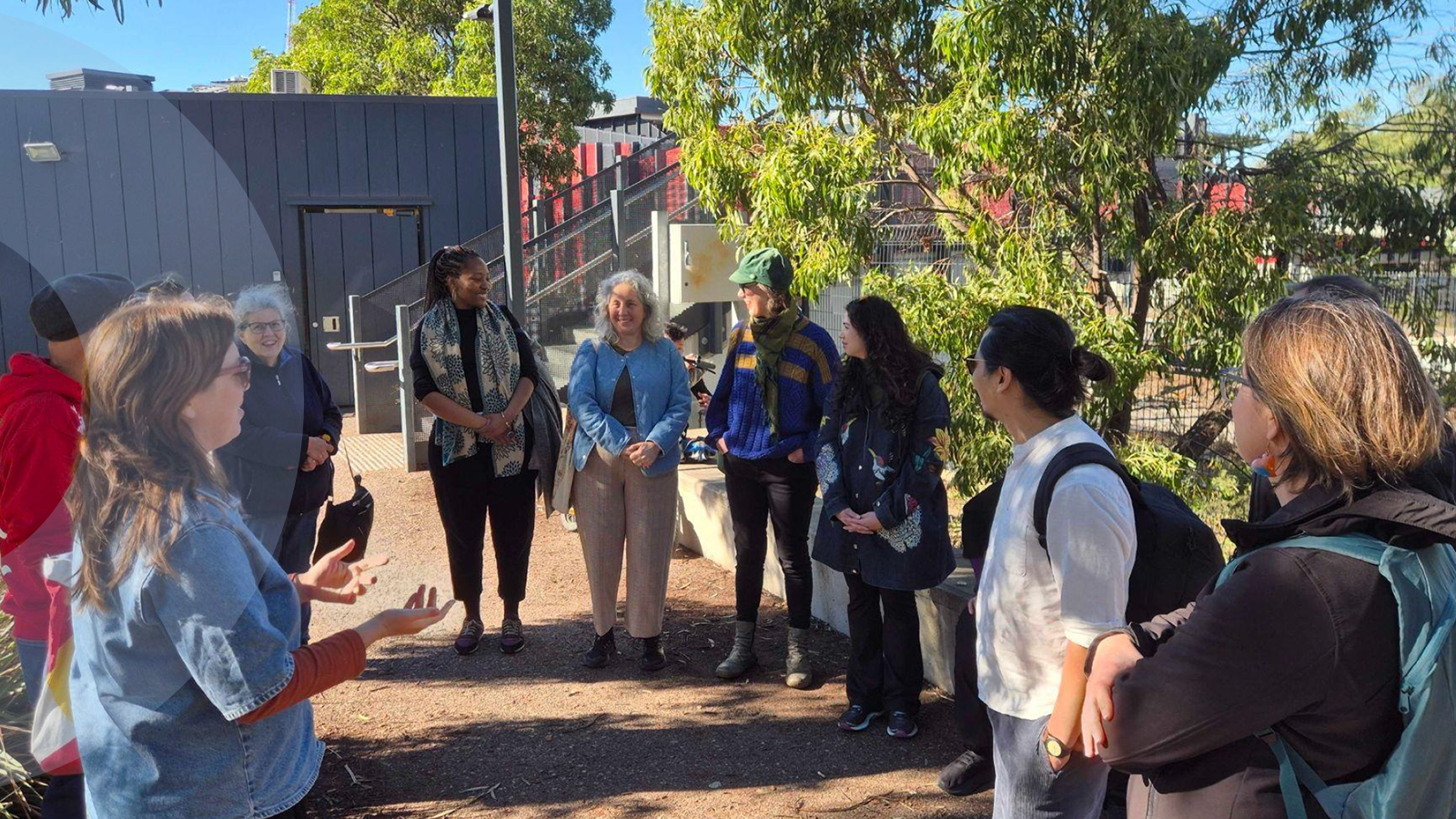
Participants were guided through a scenario: Melbourne enters its fifth straight day of extreme heat at 42-45°C. How might this impact food growing, processing, procurement, nourishment, preparation and waste?
Identified impacts:
Food production declines and income loss for farmers
Increased food spoilage and food-borne illness
Greater food insecurity and reliance on ultra-processed foods
Inequitable impacts on already marginalised communities
Strain on food delivery workers and food system employees
Rising energy costs and food waste
Growing community isolation and tension
Strengths mapping: What we can build on
First Nations leadership and cultural connection
Embed First Nations knowledge into food systems, advocating for food sovereignty
Recognise food as culture, identity, and community
Community networks and local resilience
Strengthen community networks for neighbour check-ins during extreme weather
Promote food sharing and community hubs as key food and heat resilience centres
Position schools as climate resilience hubs
Urban farming and local food access
Identify and prioritise urban farming spaces; support "right to grow" legislation
Protect Melbourne's food bowl from urban sprawl
Policy, planning and governance
Integrate food systems planning into climate resilience strategies
Develop a Victorian Food System Strategy
Update workplace safety legislation for heatwaves
Financial instruments
Introduce a sugar tax to subsidise healthy, local food
Create transitional funds for farmers shifting to regenerative practices
Explore Universal Basic Income for household food security
Next steps
Key actions identified: strengthen capacity of urban planners and food system actors; support and expand community hubs; engage non-traditional allies; and deepen focus on worker safety, schools' role in resilience, and financial levers.
Join the Greater Melbourne Heat Alliance: email info@swelteringcities.org

.png)