.webp)

We often talk about "altitude sickness" in our work at Regen Melbourne. Here, Nicole Barling-Luke explores a reframing of this feeling, and asks: what if we started thinking about the jolt we receive when overwhelmed with complexity as an invitation for seduction instead?
Scene: dinner time, Stockholm, 2024. A group sits around a table after a whirlwind Impact Safari. The door opens and in walks Pella Thiel. Immediately, the room starts laughing. As conversation progresses, I'm clocking different scales of intervention in Pella's work between hyper-local potatoes, the regional Embassy for the Baltic Ocean and international lobbying to establish ecocide as a crime. Thinking of this work in layers is a disservice to the integration Pella lives and breathes.
Altitude sickness
At Regen Melbourne, altitude sickness refers to the conceptual leaps between scales that leave you feeling overwhelmed. In Regen Streets, for example, a barrier to reducing car speeds around schools is that traffic management training takes five full working days, inhibiting community-led responses.
When the altitudes frame is helpful
Navigating different scales is necessary to orient ourselves, share what we see, stay focused on influence, and see patterns. Our viewfinders include:
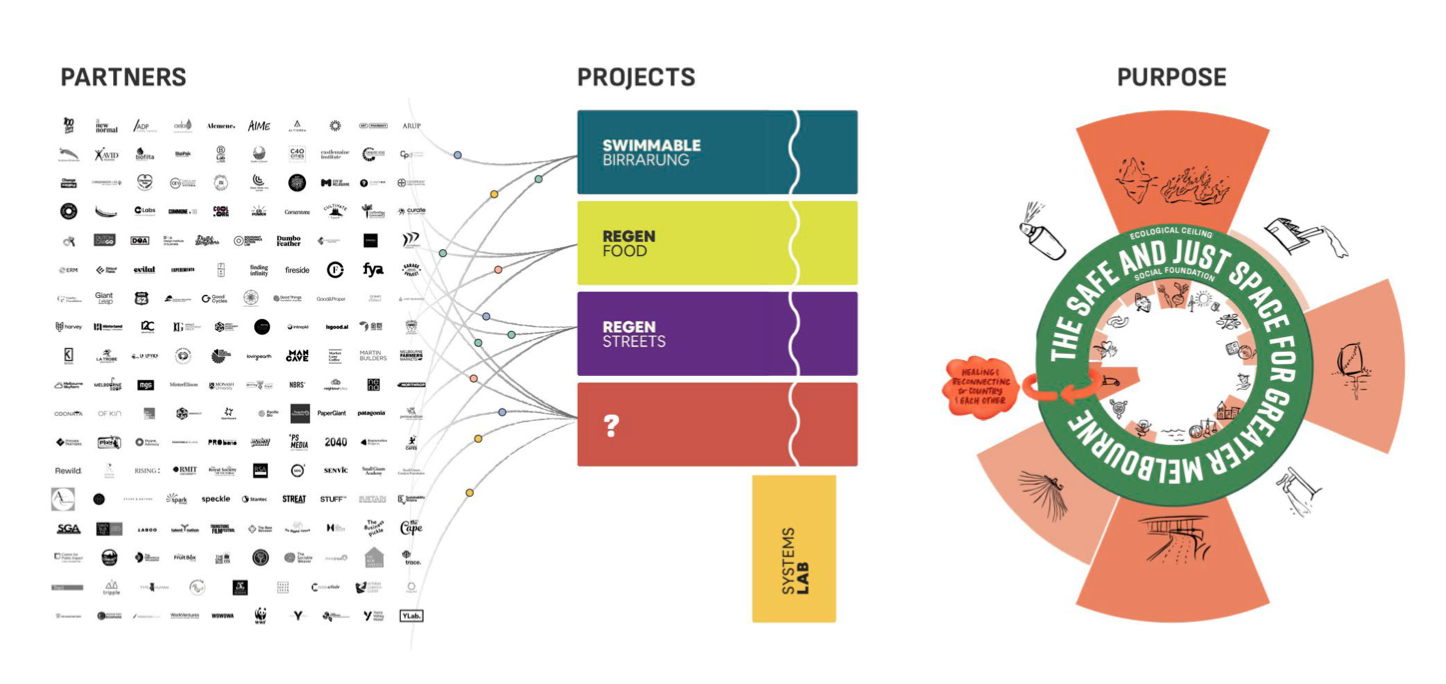
RM's impact model showing the relationship between our alliance, bold goal, portfolio and Systems Lab.
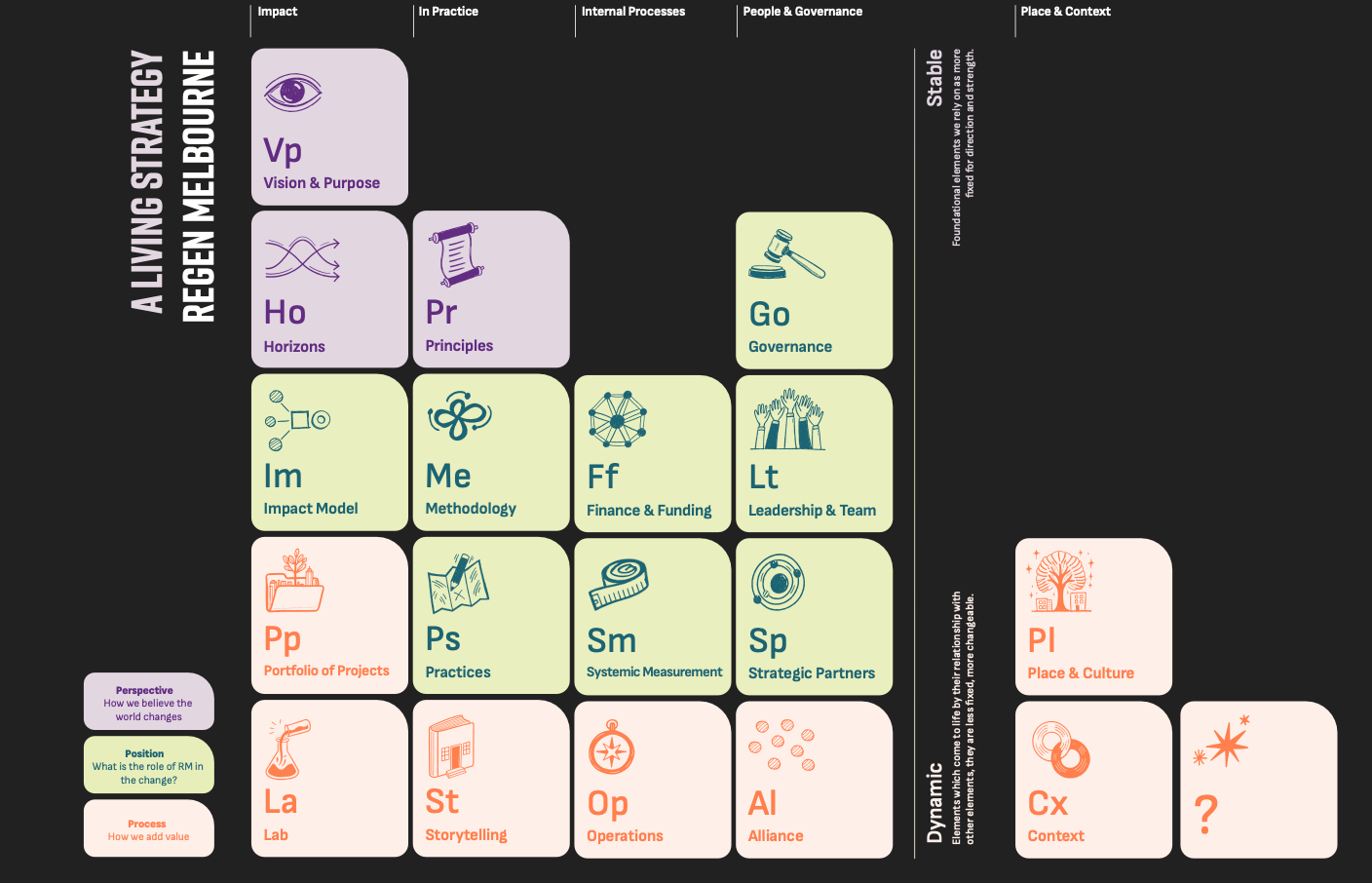
RM's strategy as a periodic table showing the wholeness of moving parts.
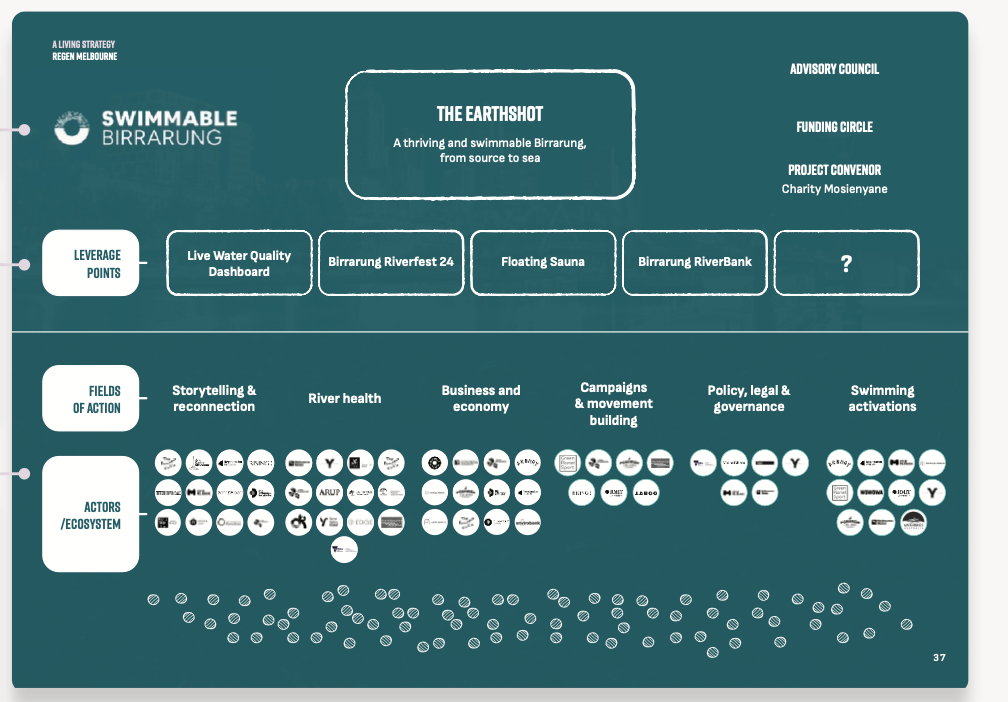
Project architecture showing essential ingredients of wildly ambitious projects.
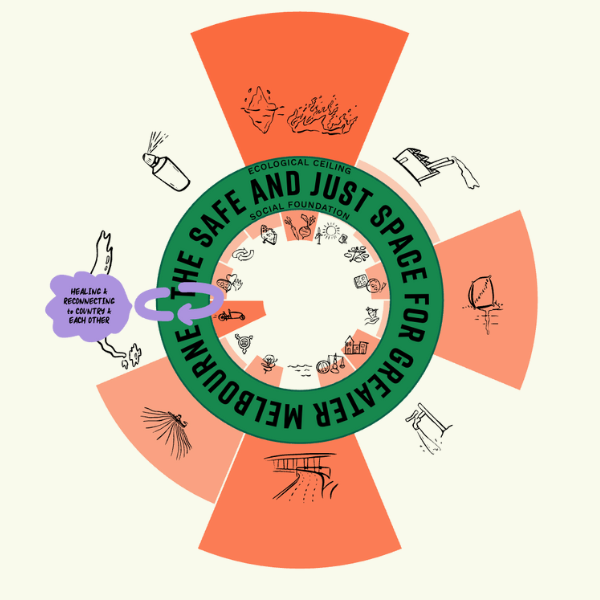
The City Portrait showing Greater Melbourne's progress towards a safe and just space.
The limitations
Altitude sickness implies linear up and down movement. In reality, anyone grappling with systems is flinging across multiple dimensions.
Altitude seduction
Being in Pella's presence, someone who embodies complexity and delights in it, is seducing. The work won't stop inducing altitude sickness, but we can pause and ask: what would it look like to instead be enticed by the complexity?

.png)