.webp)
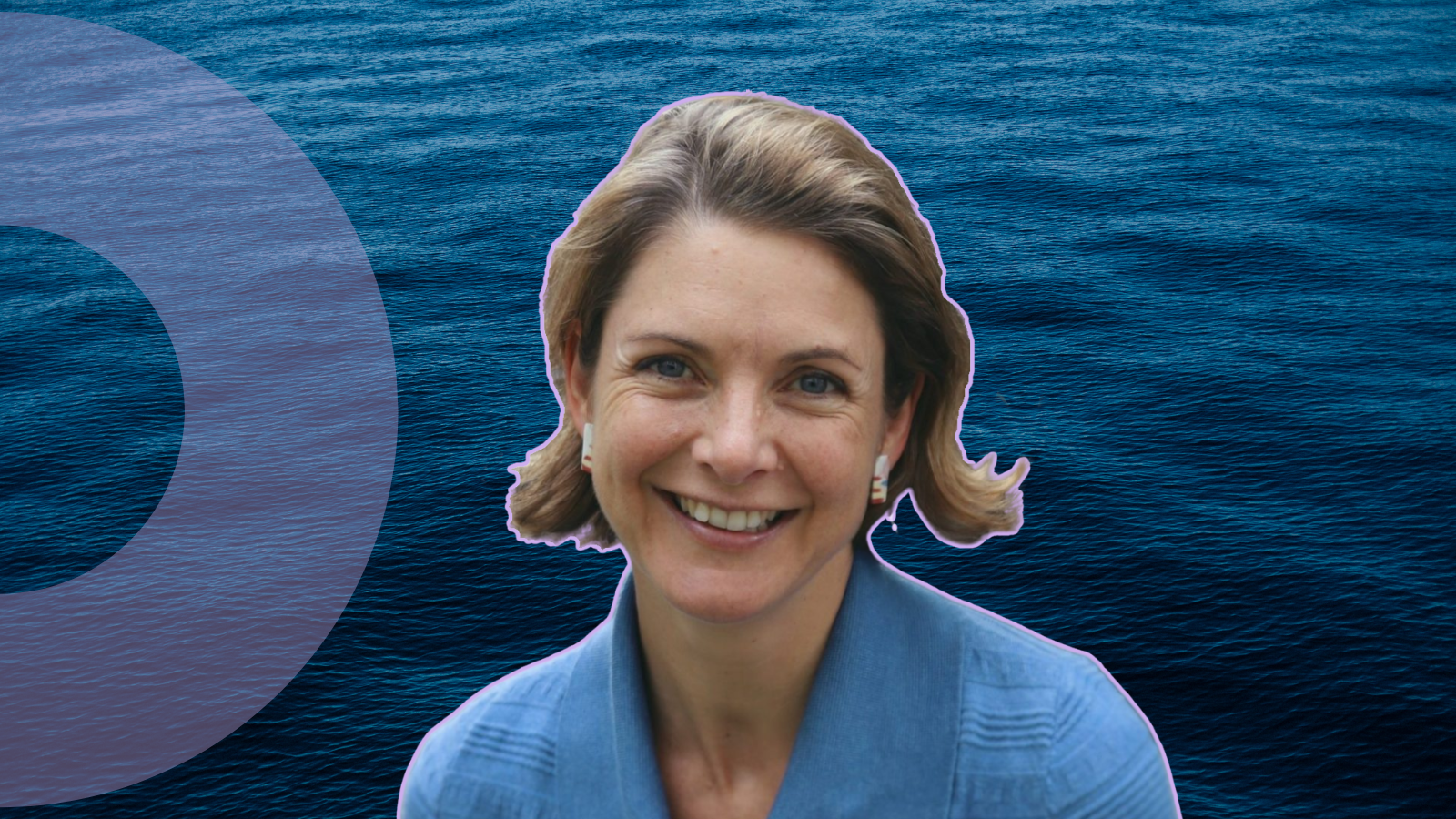
From growing up as a "greenie" in a family of farmers to studying the Millennial drought and becoming an IPCC author, Professor Lauren Rickards knows better than most the rocky ground climate adaptation conversations have ridden in Australia. With climate shocks only getting worse, she explains why now is the time for radical and urgent collaboration.
Lauren Rickards was raised with an acute awareness of the tensions that exist in Australia's climate debates. She grew up in a "back to the earth" home, complete with mudbricks, homemade clothes and a poster of David Suzuki pinned to her bedroom wall. But she also came from a long line of farmers – no less than 50 of her Mum's cousins (plus her grandparents) were dairy farmers from Western Victoria.
"I grew up with two very, very different sets of conversations, and I often felt like a translator between those conversations," Lauren explains.
This early exposure has fueled Lauren's life's work as a leading thinker, advisor and researcher on the social dimensions of climate change. When she first started studying Environmental Change and Management in the early 90s, climate change was just emerging in the discourse. "Back then, it was discussed as a distant future risk, rather than a near and present danger," she explains.
While a lot has changed, there still remains a lack of collective understanding about how we should deal with climate change. "Over the years it's become clear that the rational ideal – that we would learn about the problem, incorporate that information and take adequate actions to avert it – has not really worked."
"This concept of how we respond to climate change is far more complex than was first anticipated"
Lauren identifies her long-term study into the effects of the Millennium Drought on farming communities, and a 2014 review into barriers to effective climate change mitigation by senior decision makers, as key pillars in shaping understanding of Australia's approach to adaptation.
"Because of the Dorothea Mackellar effect, a lot of early work in the climate space was focused on differences between weather, climatic variability and climate change. In hindsight, this obscured the fact that climate variability such as droughts is not an 'other' to climate change – it's itself being altered by climate change and is worsening."
Australia's National Climate Change Adaptation Research Facility was gradually defunded between 2014 and 2018. "We had this very odd experience of being international leaders in climate change adaptation research, to suddenly just falling over the cliff."
"How systemic, fast and pervasive climate change impacts are, continues to shock even those of us who work on them"
It's one of the reasons that Lauren and Regen Melbourne are relaunching the Climate Change Exchange (CCE). "Because there's a lot of people doing a lot of different things, sometimes behind closed doors, research on adaptation can be harder to find. The unmet need to bring this together is one of the reasons we think there's a really valuable place for the CCE."
The aim of the CCE is to support rigorous and reflective collaboration among researchers, policy makers, practitioners and communities to help inform better policies. "It's particularly designed to support community-level organisations and local governments, who are frontline practitioners, and give them access to the most up-to-date research."
"Adaptation is evolving rapidly and while some groups are yet to begin, some are already trialling second and third generation approaches – ones that are far more systemic and strategic."
"I think that's the thing: we just really need to focus and I hope the CCE plays a part in that."
To mark the relaunch of the Climate Change Exchange, Regen invites researchers, policy makers and practitioners to a conversation about where adaptation is at. Register for the online event here.

.png)