.webp)

A year on from the City Portrait launch, Regen Melbourne's Director of Systems Labs, Alison Whitten, reflects on how our understanding of the platform's purpose and value has evolved. TL;DR: If last year was all about building a thing, this year was all about learning its usefulness and application.
As we prepare to celebrate the second-ever Global Doughnut Day (a new annual celebration of Doughnut Economics) we've been reflecting on what has happened since we marked this occasion last year with the launch of the City Portrait for Greater Melbourne.
On 14th November 2023, Kate Raworth joined Regen Melbourne (virtually) to publicly release the City Portrait for Greater Melbourne. The City Portrait is an Australian-first project to create a new compass for measuring our city's social and ecological progress – a platform that gives all of us a practical and holistic way of visualising how well Melbourne is supporting people and planet to thrive.
The City Portrait design team took a much needed summer rest after what was an epic amount of collaborative work to bring the platform to life. We then regrouped in early 2024 to plan out our approach to this year, energised by the interest and curiosity the City Portrait had generated.
However, guided wisely by Miek Dunbar, our partner at RMIT University, we started by stepping back, interrogating the relationship between the City Portrait's fit, purpose and application. It became clear that if last year was all about building a thing, this year needed to be all about exploring its usefulness and application in practice.
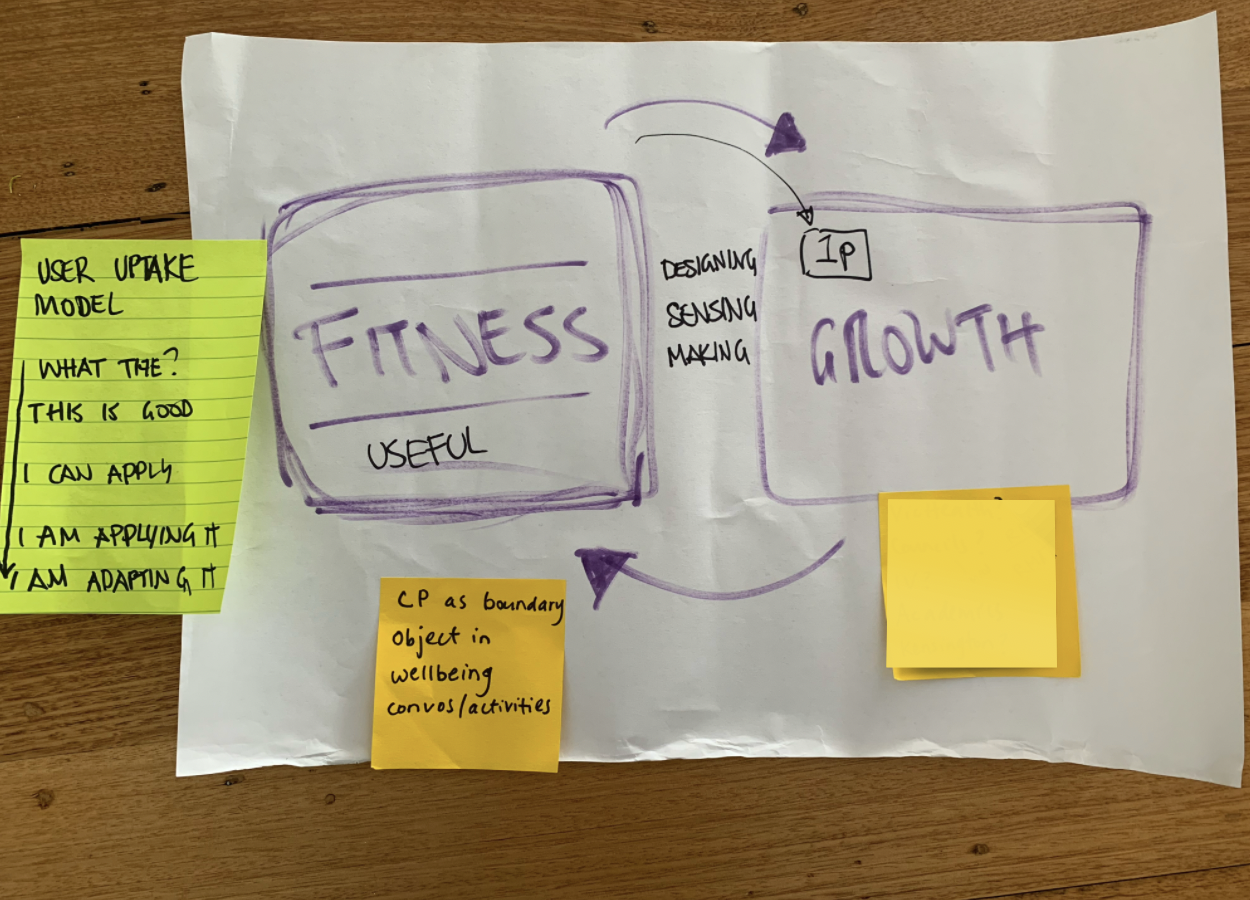
And so, instead of immediately diving into upgrading the City Portrait's digital functionality and extending it to include the final two lenses, we spent time developing better questions that would allow us to better connect the audacious goal that is represented by the City Portrait (an economy centering life, not growth) and what it actually takes to shift a system towards that.
Part of this required us to reflect on where we realistically were in the change-making process. Miek and Chris Speed, Professor of Design for Regenerative Futures at RMIT, had developed a paper that placed the City Portrait on an S-curve representing adoption of regenerative approaches. Realistically, we were still sitting in the 'Experimentation' or 'Activation' phase, starting to creep towards 'Emergence.'
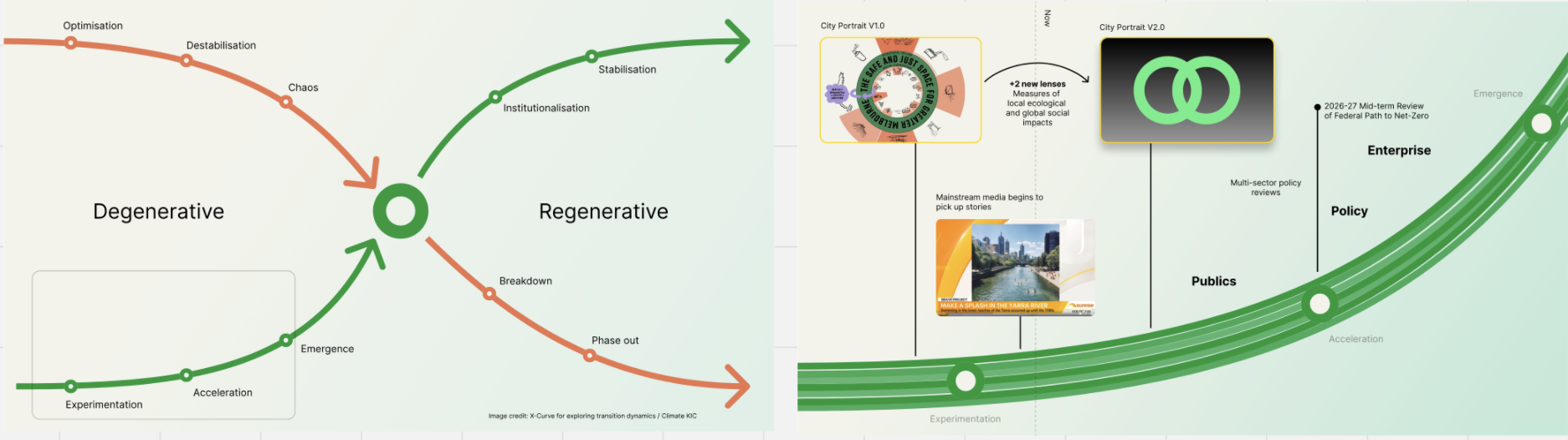
The S-curve was comforting: while it illustrated that we still had a big adoption hill to climb, it also highlighted the value of just putting the City Portrait out there. Simply suggesting a new goal for our economic system was significant.
We landed on these guiding questions to help us orient the activities and development across the City Portrait work:
A new model of progress:How is Melbourne tracking as a place that supports people and planet to thrive?
Data and practices:What measurement practices and data facilitate a new understanding of progress in Greater Melbourne?
Adoption and capability:How might we build capacity for measurement to accelerate a transition to a regenerative future?
So, what have we been doing? And what have we learned from it?
A new model of progress
Our activities in this stream have focused on further developing the City Portrait tool, including extending existing content.
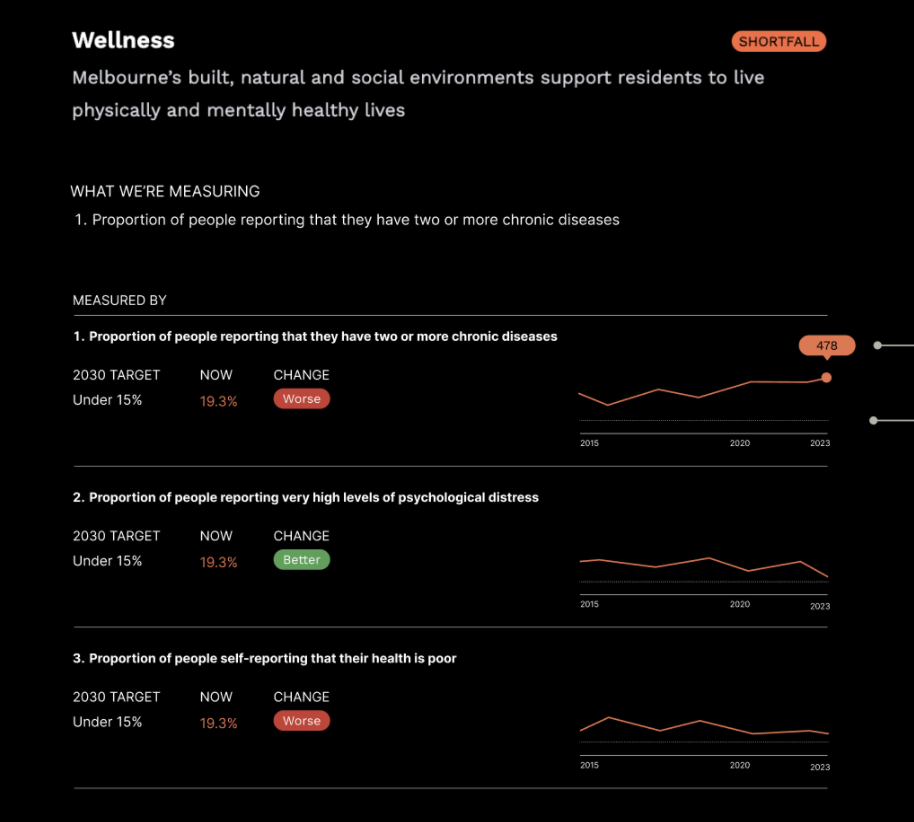
Time series data -Mohana, a Monash Urban Planning Master's student, led the charge on wrangling historical data to be able to visualise time-series trends on the City Portrait's Social Foundation indicators. Interestingly, Mohana found that many datasets we've been using only emerged after relevant policies were enacted - in other words, 'measuring what matters' often means 'measuring what's been legislated.'
Systems stories -Gypsy, an RMIT Bachelor of Environment and Society student, developed two new stories for the City Portrait, helping us to stretch our approach to this part of the platform.
Data and practices
We explored new forms of measurement through the progression of the two remaining lenses of the City Portrait, the Global-Social and Local-Ecological lenses.
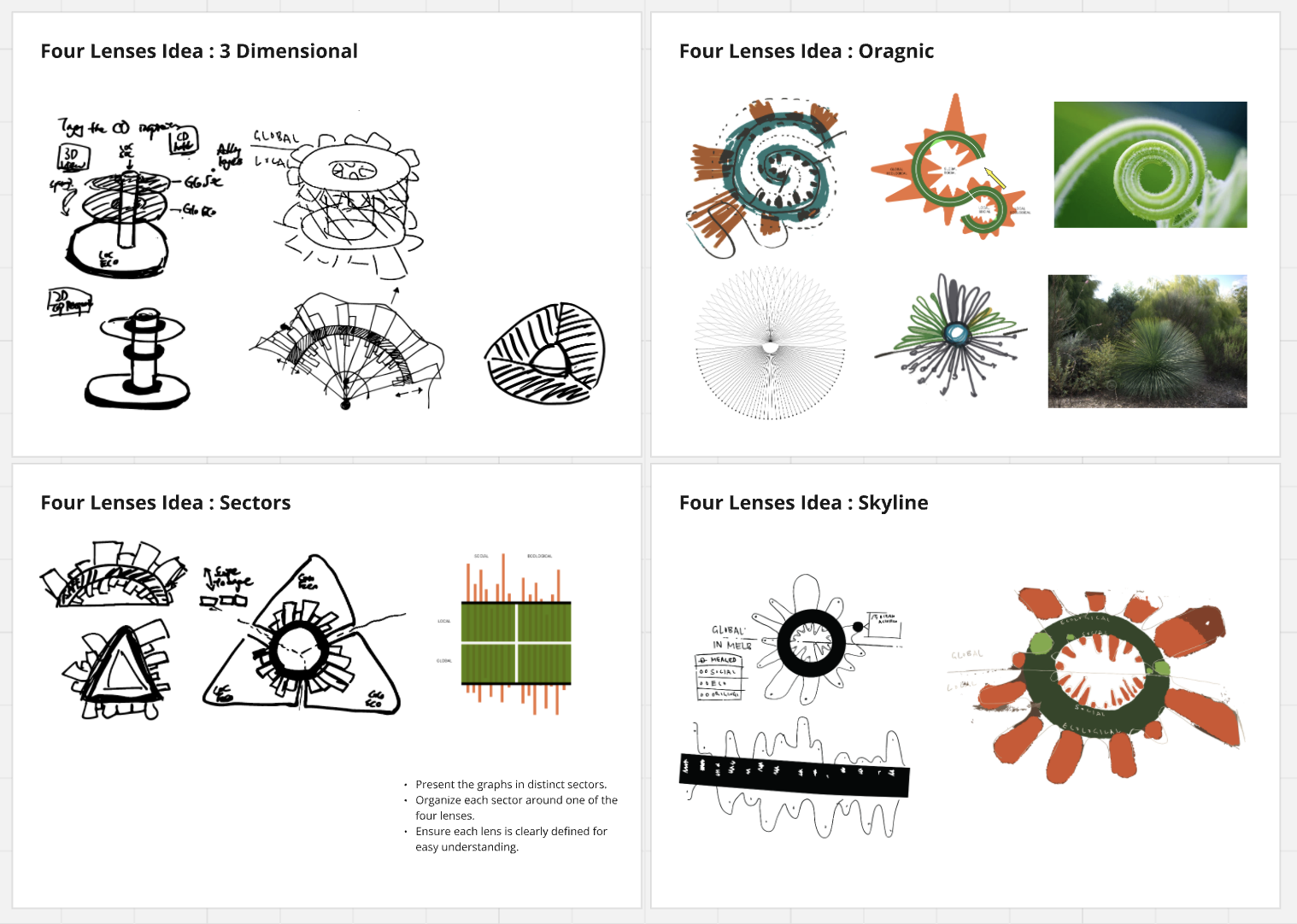
Visual prototyping -This work began with prototyping a visual relationship between these lenses and the existing City Portrait - a challenging visualisation task that cities globally are currently grappling with in different ways.
Global-Social workshops - In August, we ran a 'sprint' series of workshops on eight dimensions of the Global-Social lens. The series highlighted the value in bringing people together for reflection.
Adoption and capability
The biggest addition to City Portrait activities this year was the start of a shift from tool to service - helping to move up the S-curve from 'Experimentation' and 'Acceleration' towards 'Emergence.'
Ongoing awareness raising -We continued to raise awareness about the City Portrait. We had the chance to speak about its development on the Modern Maze podcast and host a session on 'Measuring What Matters' at the 2024 National Economic Development Conference.
Engaging with public audiences -We released the Impact Visualiser as an interactive tool to apply to mapping the Doughnut to projects, strategies, policies or places.
Targeted learning -We have been exploring the way that the Doughnut and City Portrait can inform training for local government. We are also contributing to academic research on the City Portrait as an example of a risk-and-sustainability decision model. At the same time, we are in conversation with places from Gippsland to Oxfordshire about how our experience can inform their approaches to localising Doughnut Economics.
Policy alignment -Finally, this year we delved into policy advocacy, drawing on the City Portrait to inform submission to the National Urban Policy and Plan for Victoria consultation processes. These were underpinned by a rigorous analysis comparing the City Portrait model to Infrastructure Victoria'sChoosing Victoria's Future.
So, what has all this activity shown us?
First, the fundamental goal reorientation offered by the City Portrait should not be underestimated. At a paradigm level, this new goal changes everything.
Second, starting at this level means it can be difficult to offer a 1:1 alignment with current policies, decisions and mindsets that are operating towards a goal of growth. In policy settings, the City Portrait and Doughnut Economics framing therefore generally offer the following:
Expanding the scope of policy areas of focus to incorporateall City Portrait dimensions and outcomes;
Using the City Portrait model to identify andreconcile conflicting goals;
Applying the City Portrait model as aplace-based, collaborative approach and process;and
Offeringtargetsto drive ambitious action.
Third, the City Portrait's orientation towards outcomes means that it must be understood in relation to other forms of measurement, connecting to the likes of liveability indicators, built-form measures and other more output-driven data.
So, it turns out that it's been another big year. We are again ready for rest at the end of it, and then ready to keep learning and exploring how a big idea can continue finding its way.

.png)