.webp)


'Field Notes' is a fortnightly column in which Regen Melbourne's Lead Convenors provide on-the-ground updates and insights from their work and focus areas.
How do we spot and disrupt the repeated patterns that constantly show up when trying to create deep change in our streets?
During the sensemaking phase of Regen Streets, we've taken a cross-sector approach in exploring the history, current state of play and the shared vision for the streets of Greater Melbourne.
This has meant meeting with key contacts from all levels of government; engaging with peak bodies and non-government agencies; connecting with community leaders; exploring the work of innovative entrepreneurs, purpose-driven businesses and enabling partners in the business world; and getting close to the research and ideas generated by our academic institutions and partners.
These barriers have been captured as themes in the below diagram:
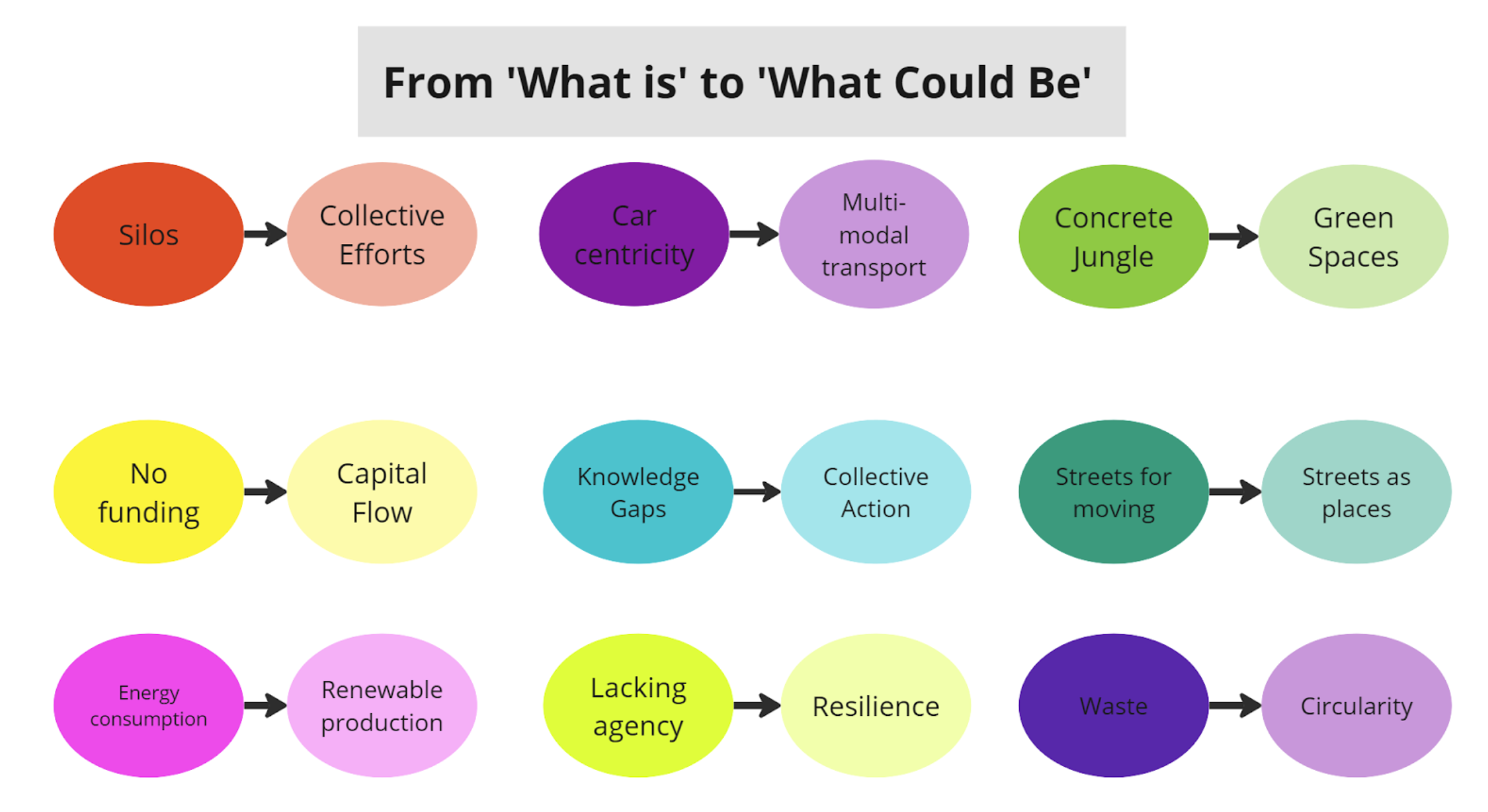
On the left are the themes of the barriers that Regen Streets players have told us they are currently experiencing. These barriers are then connected to possible desired outcomes.
Consider this:
If we emerge from operating as silos and instead bring multi-layered stakeholders together for collective action, do we then have a better understanding of what is desired and what will work to regenerate our streets?
If we shift from car-centric streets to streets that cater equally to walking, public transport, active transport and cars, do we then have safer streets and a rapid carbon reduction?
If we meaningfully engage with the entire community and allow all voices to be heard and deeply considered in our decision making, do we improve the resilience of the neighbourhood?
When listening deeply to all of these actors and exploring the barriers and possible outcomes, I'm also seeking to spot patterns. Pattern spotting is a core practice for systems change. It helps to unravel complexity to reveal rhythms and structures that can support deep change work.
Pattern spotting can help us understand the dynamics that characterise a complex system, which in turn can support activating the changes within the system. Systems can start to shift when these patterns are disrupted and opened up, organising in a different way to serve a new purpose.
By exploring the long-term patterns of behaviour in the existing system, we can better understand the possible leverage points that will lead to new ways of working and, ultimately, better outcomes.
What do you notice about the barriers and outcomes? Do these align with your experience or are there important aspects missing? Please reach out with your thoughts at nina@regen.melbourne

.png)