.webp)
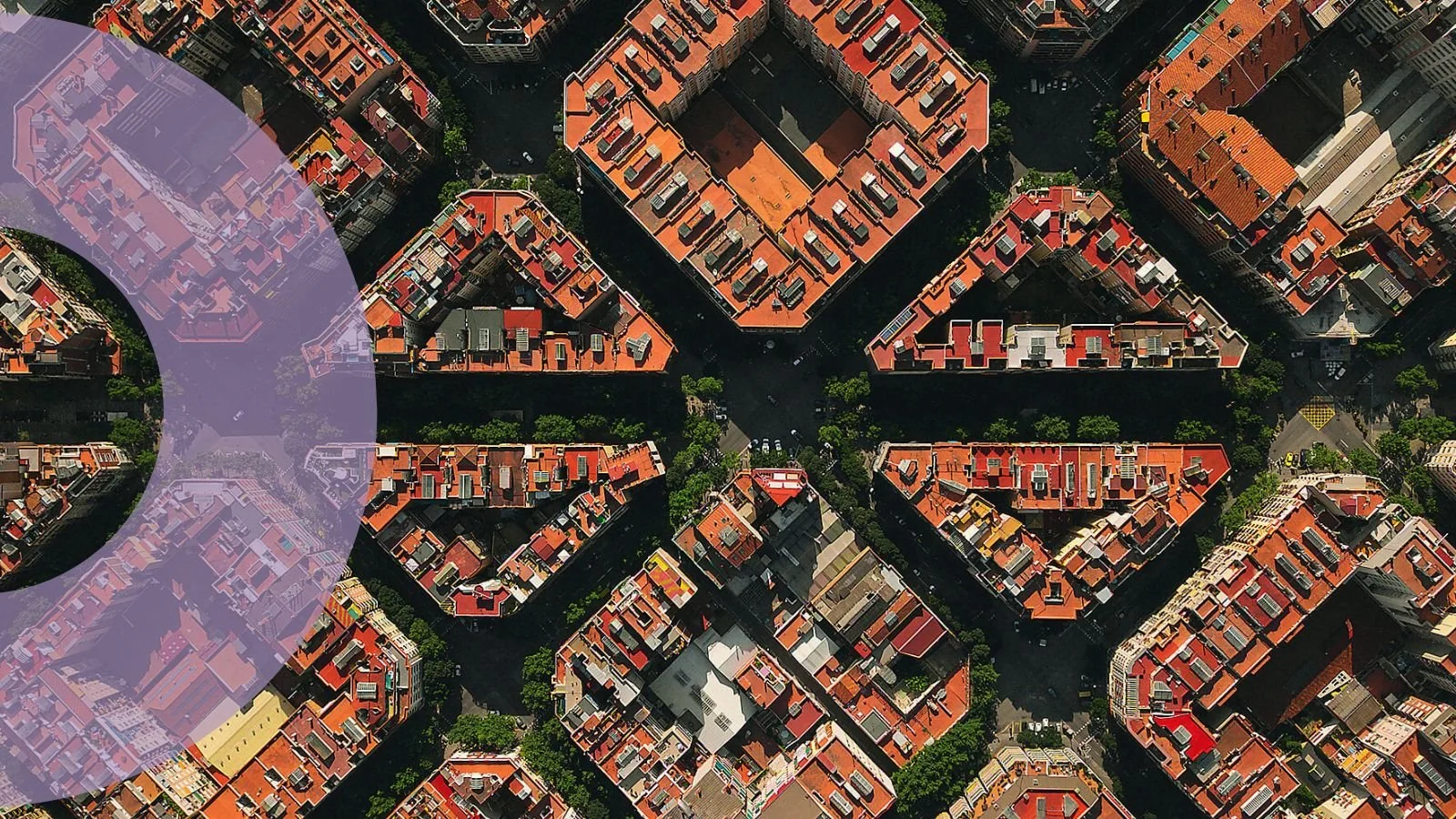
Globally renowned urban planner and mastermind behind the Barcelona Superblocks concept, Salvador Rueda, visited Melbourne for Design Week. While here, he hit the pavement with 300,000 Streets lead convener Nina Sharpe and a group of city-shapers to get a sense of Melbourne's potential for transformation.
On his recent visit to Melbourne, design legend Salvador Rueda said something that stuck: in our current way of living we give the city to the car, not the citizens. His musings are not an attack on the automobile but an invitation for system-wide, integrated thinking that leads to transformation.
"The car is not domesticated", was his opening provocation during a roundtable event hosted by RMIT, acknowledging that our cities remain dominated by vehicles rather than people. We need to fundamentally "redesign the networks of the city" to create "a human urban city for people, not cars".
Salvador has dedicated his career to addressing the escalating climate crisis and has consulted to more than 140 cities across the world. RMIT recognised his contribution by awarding him an honorary doctorate. Salvador's credentials are many and varied: a biologist, psychologist, activist, water steward and one of the world's most influential city planners. Or – as his wife Cecilia described him – the Shakira of urban planning.
The Superblocks revolution
His goal in the design of the Barcelona Superblocks was simple: to better the lives of the people of Barcelona through mobility and public space. A 'superblock' covers an area of multiple city blocks – typically nine in a 3x3 format – that excludes through-traffic. Citizens have priority, though cars still have low-speed access. Superblocks can release up to 70% of the city that is currently locked to traffic.
The 500 Superblocks proposed for Barcelona come at a cost of €300 million (€30 million per year over 10 years), which represents relatively modest investment for transformative city-wide change. And the liveability evidence speaks for itself, with demonstrated improvements in health outcomes, reductions in air and noise pollution and street parties in abundance.
Salvador sees the resistance to change as a cultural and political problem. The main obstacle, he says, is that we "have the car in our brains. It is not a traffic problem, not an economic problem, it is a cultural problem."
"Public space allows us to move from being pedestrians to citizens"
Participation and tactical urbanism played a central role in the successful delivery. Rueda claims that matching participation with a solution that makes sense was key. Good outcomes emerge from a process when it is the decision of the people, not the sector.
Salvador's design efforts are a direct response to facing the biggest challenges of our times. As an urban ecologist he knows that shade and soil provide a refrigeration process that allows for climate adaptation.
Hitting the streets of Melbourne
We experienced pockets of this refrigeration on a walk through the city with Salvador, Cecilia and a group of street super-humans. We were guided through Guildford Lane by community leader Katherine McPherson, who shared stories of the transformation of the laneway enabled by City of Melbourne's Green Your Laneway program.
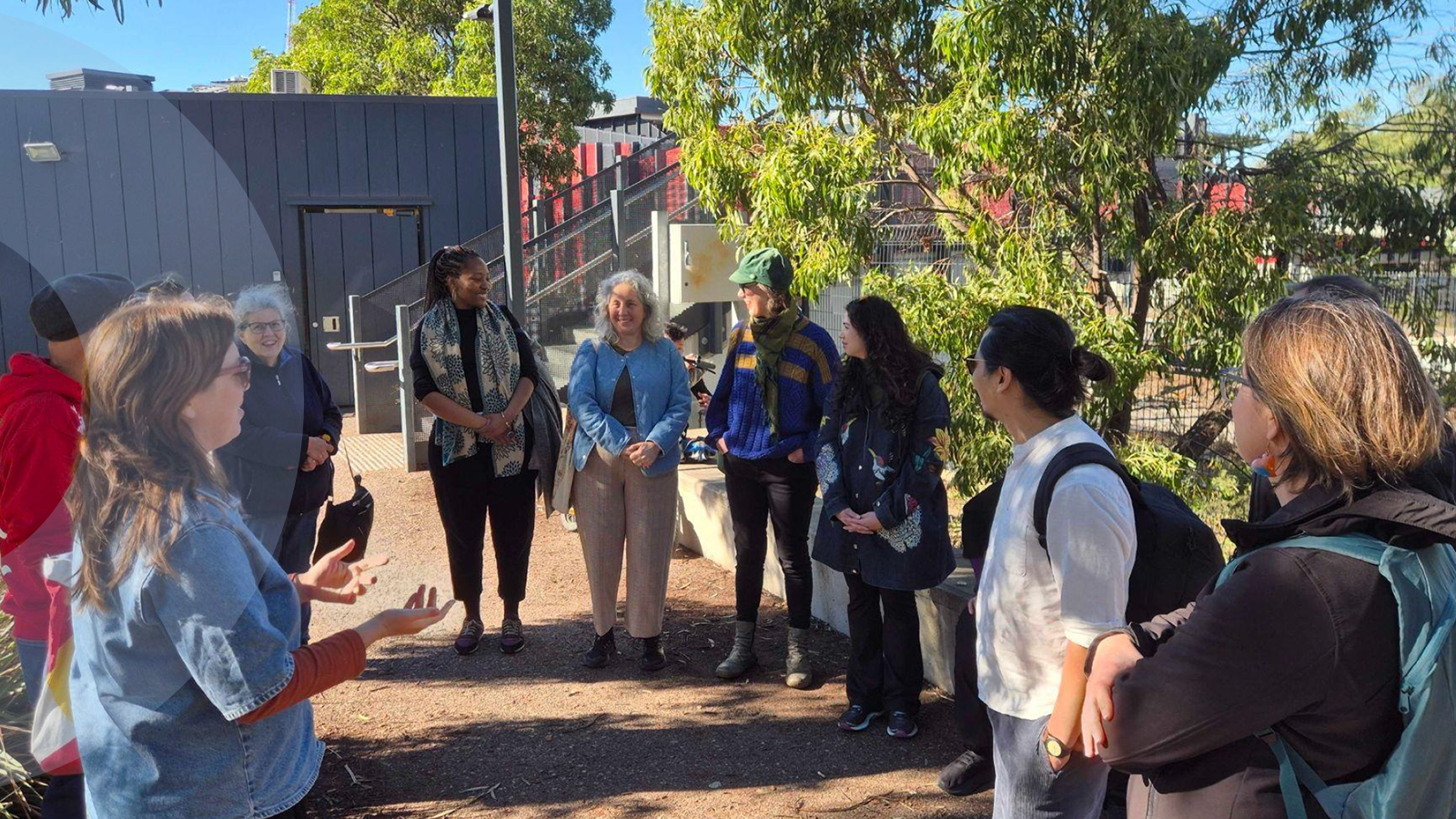
We then visited the test garden at Federation Square – a partnership project between Hassell Architects, Superbloom and University of Melbourne – a densely planted, biodiverse space that was previously concrete.
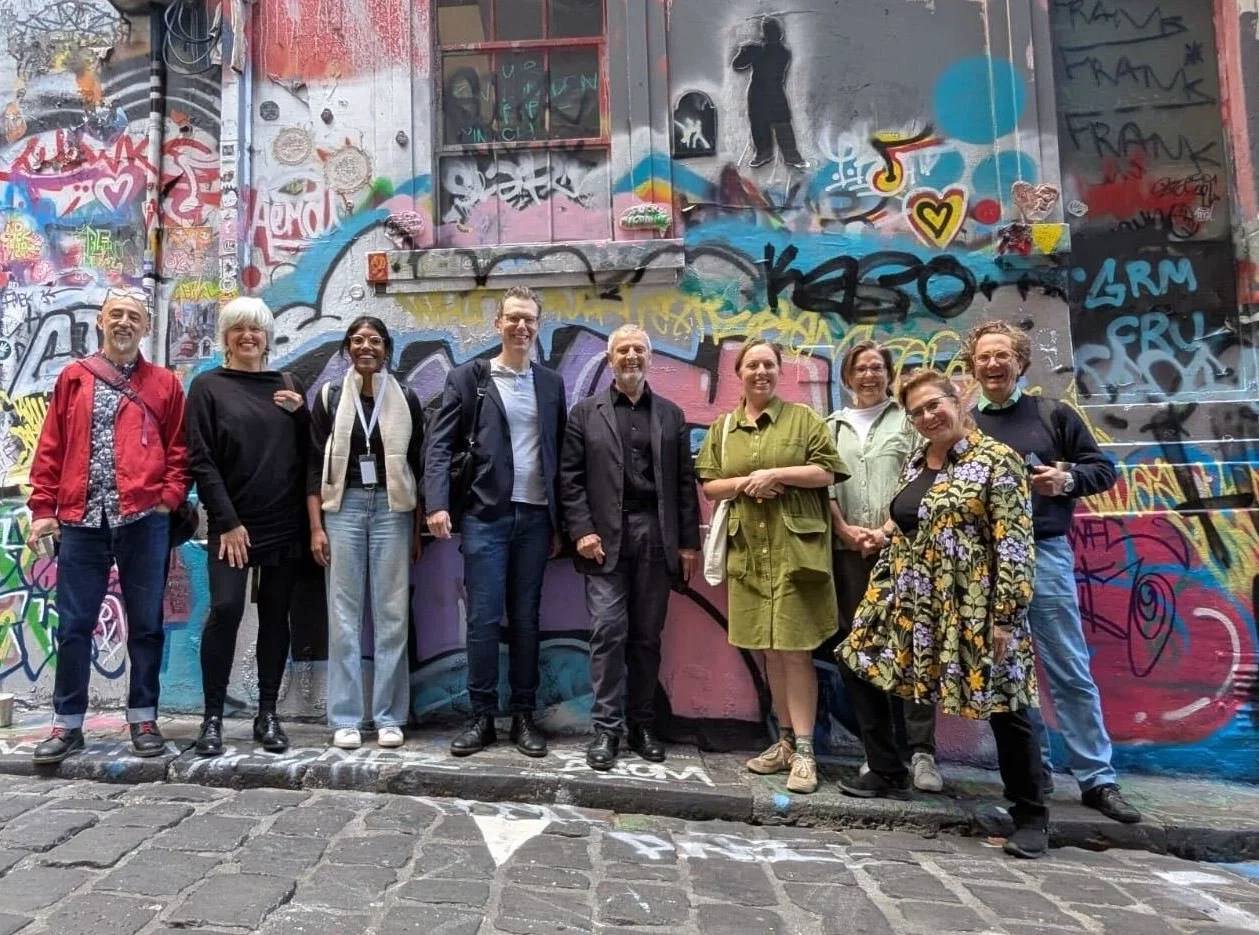
Could we have Melbourne Superblocks?
Salvador believes Melbourne's existing structure makes Superblock implementation "very possible" in the central business district. The grid layout provides an ideal foundation.
Professor Marco Amati has worked with Salvador to explore what an application of the Superblocks model would look like for Melbourne. You can read more about this here.
Technical solutions exist, but cultural and governance innovation is needed to implement them at scale. 300,000 Streets views the streets of Greater Melbourne as an interconnected network which applies a systems lens to how we approach change. There is so much we can learn from Barcelona, and other global cities that can be applied and adapted to our local context.

.png)